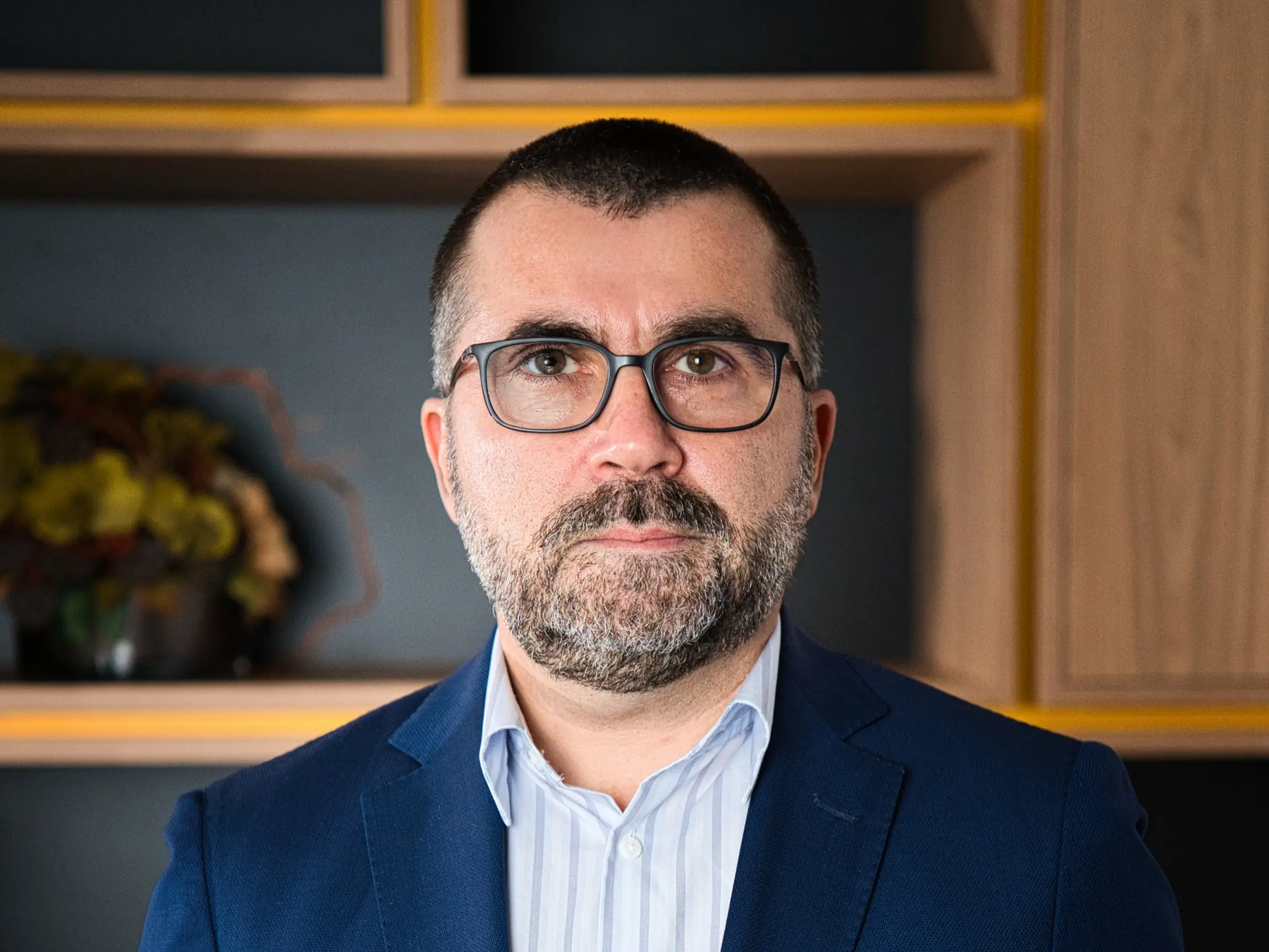
Ömer Tetik, BT: The year of the banking rebound
2021, the Year of Relaunch. Ömer Tetik, BT’s CEO, gave an interview to Revista Biz about lessons learned and expectations. Enjoy! 😊
How do you see the economy evolving this year? What growth scenarios do you work with when you set the bank’s strategy?
We prepared for different plans, taking every signal, figure and trend into account. We expect a rebound, with annual growth that could head towards 5% year-on-year. Clearly, though, much depends on the course of the pandemic, the pace of vaccination, and travel and consumption restrictions in other European countries. Romania has a complex economy that is highly interconnected with Europe, so the pace of recovery will be aligned with that of the major European economies. At BT, the headline for this year is Relaunch, and we set out into 2021 with that mindset. We want to be as proactive as possible and play a major role in supporting companies, people and the economy. We are aware of our role in the economy, and that carries responsibility.
How do you rate the local business community’s response to the pandemic — were entrepreneurs flexible enough to adapt to the new context?
Entrepreneurs are fighting, and those hit hardest by the pandemic have tried to be flexible. The degree of adaptation depends on the specifics of the business and the management style: some have reinvented themselves, others are waiting things out or are in survival mode. Some shareholders injected capital into their companies and, in general, firms tried to keep their best people. Some businesses moved online or increased production capacity. Those in the most affected areas, such as HoReCa, made every effort to adapt and at least cover part of their fixed costs through online deliveries. They remain severely affected and are waiting to reopen their businesses, as well as for access to grants in the HoReCa area. There are also sectors that have prospered, because every crisis comes with opportunities — construction, IT&C, and online services and products, for example. E-commerce has seen the strongest growth since last year and, for context, most companies set up in 2020 are in e-commerce and software services. Through BT’s measures to support entrepreneurs, our involvement in government programs — where, for instance, in IMM Invest we were the main bank — and through the “Buy Near You” and “Buy from a Small Business” initiatives, we’ve helped build a sense of trust and of community among the entrepreneurs who bank with us. For them, it matters a great deal not to be — and not to feel — alone, and to have certainty and signs of continuity.
What did adapting to the “new normal” mean for banks? How did BT adapt its strategy during the pandemic?
It varies by bank, but banks adapted quickly, even if it wasn’t easy, especially for smaller players. At BT, we quickly realized there would be disruptions in economic flows and that lockdown would have effects such as delayed company cash flows and a fall in consumption in some sectors, while restrictions would also drive behavioral change. We focused on our clients, spoke with them, put ourselves in their shoes and knew we could help save the economy and many jobs. So, as lockdown began, we set out with a new mindset and a proactive stance in supporting companies and borrowers, because from March 2020 onward, solidarity became our main objective. BT took the first step by announcing support measures for clients. We’re glad we helped set a trend in the market. We kept our network — more than 500 branches — open, accelerated digitalization and brought forward investments.
What objectives have you set for the second year of the pandemic?
Priority number one is supporting our clients. We also want to set the tone by supporting NGOs with impact in the largest possible communities. Strictly on the business side, we’re relatively optimistic and have appetite to finance. We want new business and aim to grow prudently and healthily. I think we learned from 2020 and from the broader context — we’re focused on sustainability, inclusion and responsible business (both social and green), we want to innovate and we have big ambitions.
What does the extension of loan repayment deferrals mean for banks? How do you expect the non-performing loan ratio to evolve this year?
By deferring repayments, banks found a way to stand by clients who struggled to meet their loan instalments. We’ve shown we’re a partner for the journey, whatever the road and the weather. It certainly helped, but this year repayments need to resume after last year’s deferrals. For some clients, such as those in sectors heavily affected by the pandemic, instalments can also be rescheduled in 2021, for up to 9 months. When the moratorium expires, we expect an increase in the non-performing loan ratio at the banking system level. So far, the ratio remained low in 2020, around 4% of total loans, but we’re talking about loans totaling nearly 42 billion lei that were deferred across the sector — about 15% of total non-government lending.
How do you see lending evolving in the period ahead? Which sectors will generate more demand for financing?
I think opportunities can come from sectors that are less developed than in other countries, or from reinventing industries and businesses — agriculture, for example. Clearly, as has been widely discussed, the pandemic has accelerated structural change, favoring some industries and not others. As a principal financier of the economy, we focus on areas where Romania is a cluster of competencies, such as IT and agriculture, and on areas where we have a good competitive or geographic position. Although we are a developed EU country, we still have a gap to close versus the West, which will bring higher incomes, greater purchasing power and stronger consumption. There is still room to grow, which is why we will support any business that can contribute to economic and social development and to people’s well-being. Among the areas where we see strong growth and where we will provide significant financing, I would mention agriculture, IT, infrastructure, healthcare and trade. We have a particular focus on the new green economy and on sustainable development — it’s an area we’re watching very closely, where we want to commit capital, get up the learning curve as quickly as possible and be a first mover.
What does remote banking mean now that the pandemic has accelerated digitalization?
The pandemic and the structural changes it accelerated have significantly changed how clients interact with the bank and with their money. The expectation now is that anything that can be done remotely should be done remotely. Clients no longer have the time or inclination to come to the bank for basic operations. Banks, on the other hand, come with a legacy: they started offline and are heavily regulated. Many areas of legislation still have shortcomings or gaps, which has constrained us, and the banking system is moving more slowly on digitalization. We are making major efforts and investments every day to adapt our business and systems. Fortunately, I believe we’re on a good trajectory.
At the bank, from this perspective, “the hero” was BT Pay, the app for contactless purchases at merchants, money transfers and donations — all by phone. Last year, the number of phone payments tripled, reaching 4 million purchases a month. The number of transfers via the app also quadrupled, to 1.3 million a month. In the first days of the state of emergency, in addition to the bank’s significant donations, we also wanted to make it easy for clients to donate to their preferred NGO, and our colleagues spent nights at the office to implement, in just a few days, an online donations module and donations in BT Pay. Clients responded immediately, and already tens of thousands have donated. I believe we have both strong infrastructure to build on and the right mindset. The plan is for all basic, low value-added operations to be done in-app, as efficiently and as user-friendly as possible, while more complex operations that require advice or decisions on the customer side will be done in branches, in a way that delivers the best possible experience. In general, we believe retail — not just in banking — has two major components: logistics and the customer experience. What we see now is the logistics moving online, while the experience remains in-store — or, in our case, in branches.
How do you see the banking system developing in 2021? What will post-pandemic banking look like?
The banking system entered the pandemic in a much stronger position than in 2008, so banks have the resources to support the business relaunch. Indicators such as liquidity and solvency are at comfortable levels even under adverse economic scenarios. As we’ve seen, Romanians started saving more; domestic savings increased, which led, at the sector level, to a downward trend in the loans-to-deposits ratio toward its historic low of 67% in December. In other words, at the end of last year the gap between deposits and non-government lending was more than 138 billion lei — roughly 28 billion euro — which for us, the banks, represents an opportunity cost, because part of that money can go into lending and supporting economic growth. How do we see 2021? Romanians always have plans, so we expect lending to grow, given the low real financing costs and the sector’s excess liquidity. We also expect some deterioration in loan portfolio quality in the coming quarters, meaning a higher non-performing loan ratio. We will focus increasingly on financing green projects, as I mentioned, with the primary aim of promoting sustainable development in Romania — a priority for Europe and for BT.
Romania has been one of the most active CEE markets for banking M&A. Under what conditions will consolidation continue in the local market?
Romania will continue to consolidate, especially given low interest rates, pressure from excess liquidity, operational efficiency needs and the resources required for the transformations of this decade. The banking sector is quite heterogeneous and fragmented, with champions and with players that have marginal market shares. For small banks, the costs of staying in the market are high, so we expect to see consolidation initiatives. The crisis triggered by COVID-19 will accelerate banking sector consolidation across Central and Eastern Europe; it all depends on how small banks cope with the challenges to profitability and capital. Overall — at a personal level and within organizations — the pandemic has contributed to maturity in every respect. It has shown us that we can withstand, adapt and even prosper in periods we could never have imagined. At BT we are aware of our role in the country’s economy and in Romanians’ lives. We will continue to build and grow so that we finance Romania and also set an example as a local champion. Romania needs solidarity and examples to follow.