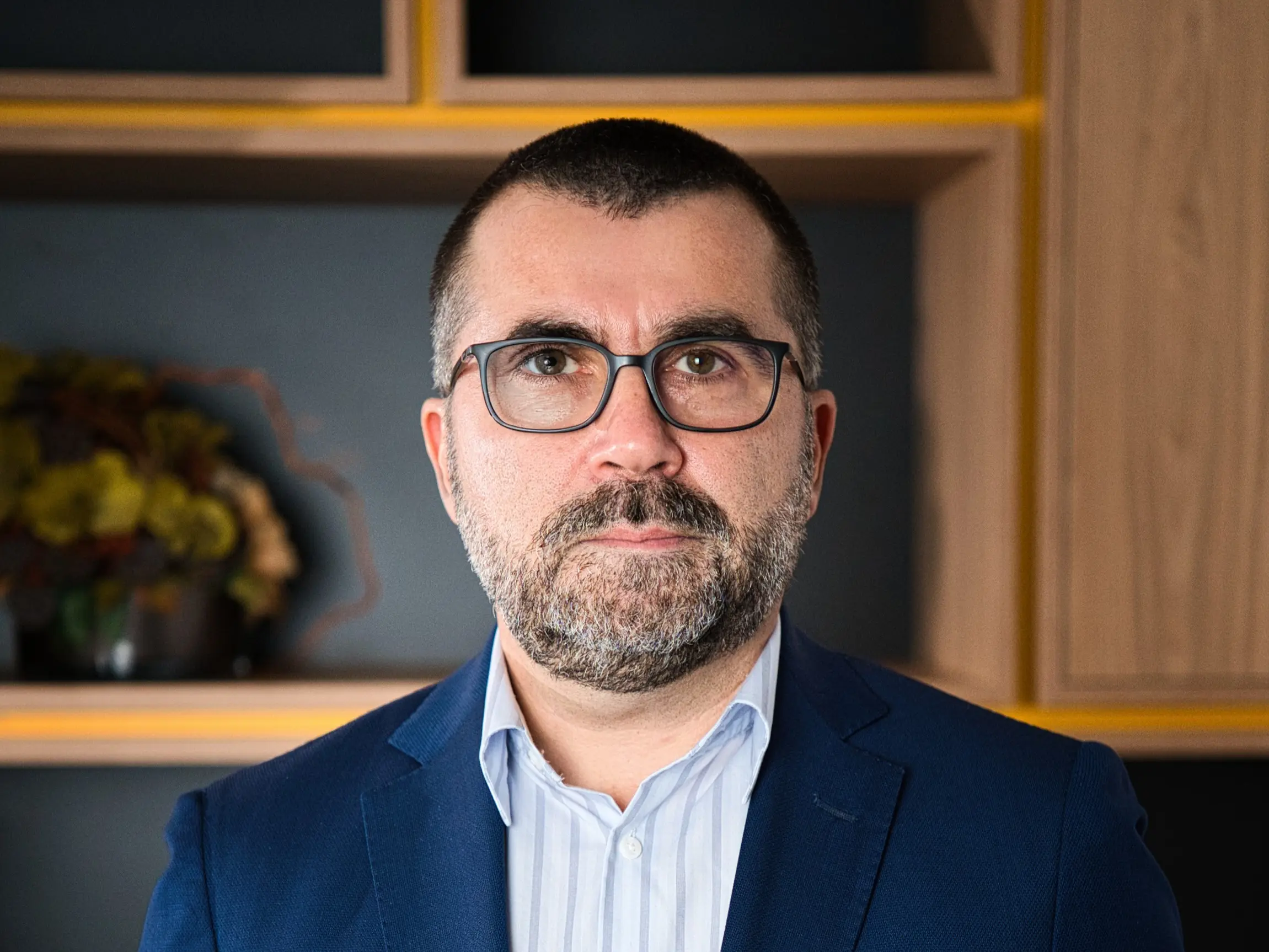
Vlad Pintilie, BT Capital Partners: People come back, invest regularly, and gradually build a portfolio after placing their first trade. That is the real test of converting an app user into an investor.

Vlad Pintilie, Deputy CEO, Trading, BT Capital Partners, gave an interview to Financial Intelligence about how Romanian investors’ interest in ETFs is evolving, the profile of the new generation of investors, preferences for local and international instruments, and the outlook for the Romanian market.
In the interview, part of the editorial project “ETFs and the new generation of investors: opportunities, performance and the future of passive investing in Romania”, Vlad Pintilie also discusses BT România ETF, launched this spring, its role in bringing in new investors, and the increasingly easy access to investing via BT Pay.
The number of BT Capital Partners accounts opened through BT Pay has reached 35,000, double compared with June 2026. What drove this acceleration and how important was the launch of BT România ETF in attracting new investors?
The acceleration shows that easy access matters at least as much as appetite for investing. When a client can reach the market from an app they already use, some of the operational and psychological barriers fall away. The increase from roughly 17,500 accounts in June to 35,000 is a strong signal in this respect. The launch of BT România ETF added an easy-to-understand product: exposure to a basket of Romanian companies through a single investment. The result reflects a combination of digital distribution, market interest and a product offering.
Who are the new investors coming to the market via BT Pay? Are they primarily first-time investors or clients who already had capital markets experience? What can you tell us about their age, invested amounts and investment behaviour?
Access via BT Pay is an opportunity to attract both first-time investors and clients who want a more convenient channel for their transactions. New investors span all age groups, levels of experience and financial means, with an average age below 40. What matters strategically is that people come back, invest regularly and gradually build a portfolio after making their first trade. That is the real test of turning an app user into an investor.
BT Capital Partners has over 90,000 clients investing on the Bucharest Stock Exchange. Are you seeing a shift in behaviour from picking individual stocks to ETFs and more diversified investing?
We are not necessarily seeing individual stocks replaced by ETFs, but rather a diversification in how clients build their portfolios. An ETF can be the core of a long-term strategy, while individual stocks remain suitable for those who want to analyse companies and take specific risks for potentially higher gains. The accelerating growth in client numbers highlights the breadth of our distribution base, and for us, progress means better-diversified portfolios and more informed decisions. We also continue to see the need for new issuers and appetite for companies from still underrepresented sectors of the economy. With the help of intermediaries, the exchange has managed to offer investment and savings options for both long-term horizons and active trading, while more sophisticated clients need a wider range of products and deeper markets to meet their needs.
To what extent can ETFs turn Romanian savers into investors? Do you think the product’s simplicity and the ability to invest directly from an app like BT Pay can bring to the market people who until now kept their money mainly in deposits and savings accounts?
ETFs can make the step from saving to investing more accessible, but they don’t do it automatically. The instrument’s simplicity and the ability to invest via BT Pay reduce friction, and diversification helps investors avoid depending on the performance of a single company. At the same time, an equity ETF is not a deposit: its value fluctuates and there can be periods of decline, which investors may also see as buying opportunities. That’s why financial education must go hand in hand with digital access. The objective is to help people separate their liquidity buffer from the capital they can invest for the long term, and to bring into the economy funds that have not benefited from financial intermediation so far or that were parked in other geographies.
BT România ETF is focused on the local market. What is the profile of the investor who chooses it and what are they looking for: diversified exposure to Romanian companies, simplicity, long-term investing or an alternative to picking individual stocks?
The product primarily addresses investors who have confidence in Romania’s economic outlook and are looking for a simple way to participate in the performance of listed companies. The past few years have been an example of spectacular growth despite geopolitical headwinds, which has generated strong interest in local issuers from both Romanian and foreign investors. For a beginner, the advantage is not having to select every stock themselves; for an experienced investor, the ETF can be an efficient portfolio building block. The product’s versatility comes from features that make it useful for any portfolio with at least a medium risk profile.
International ETFs have grown spectacularly thanks to low costs and easy access to highly diversified portfolios. What does the Romanian market need to do for local ETFs to reach a critical mass of investors and assets under management?
To reach critical mass, the market needs three mutually reinforcing elements: accessible distribution, liquidity and trust. Total costs must be competitive and transparent, price discovery needs to work well, and investors should be able to buy and sell on reasonable terms. Equally important are financial education, recurring contributions and developing a product range that addresses different needs. An ETF market is not built just by listing new tickers, but through consistent use. And an exchange with more relevant issuers and better liquidity provides a stronger foundation for passive products as well.
For an investor with 300, 500 or 1,000 lei a month, how suitable is a recurring investment in an ETF?
Recurring investing, regardless of amount, can be a very good discipline for any investor, especially those with a sufficiently long horizon and a separate reserve fund. The advantage is that the investor doesn’t need to focus on the perfect entry point and can accumulate fund units or shares gradually, including when prices are lower. Beyond the financial performance of the issuers underlying the ETF, the growth in assets for this category of products creates the premises for a more meaningful impact on the economy and can in itself drive positive long-term developments.
BT says that new investors via BT Pay mainly come from the Private and Premium Banking segments. How can this be broadened to the wider public and especially to younger generations, who can start with small amounts but have a very long accumulation horizon?
Reaching the wider public means turning investing from an exceptional event into an accessible habit. For all ages, the digital experience is essential, paired with clear explanations about risk, costs and time horizon. The ability to start with small amounts and invest regularly can be more important than offering a sophisticated product. The Private and Premium segments are well placed to add diversification to portfolios and also have funds readily available to allocate to new products. The key is to build trust and demonstrate that disciplined investing is relevant even for those who don’t start with substantial capital.
From BT’s perspective, what potential does the Romanian ETF market have over the next five years?
We are optimistic about the potential in the coming years. The conditions are favourable: better digital distribution, growing interest in investing and a real need to diversify savings. The next stage should be measured by assets under management, active investors, recurring contributions and the quality of liquidity. If the industry delivers transparent, accessible products and the base of issuers expands, ETFs can become a natural component of Romanians’ portfolios and contribute to deepening the capital market. The Bucharest Stock Exchange’s total market capitalisation has tripled over the past five years; we could see at least that for the ETF market over the next five years.