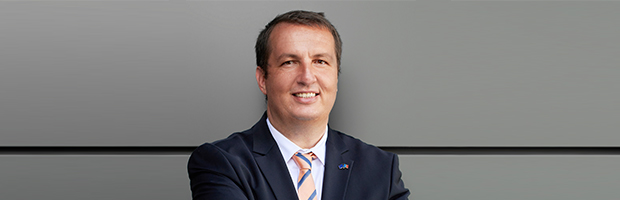
The Leader. Interview with Ömer Tetik, CEO, BT, for BIZ magazine
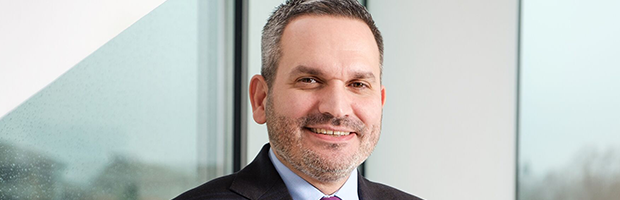
Interview with Ömer Tetik, CEO, BT, for BIZ magazine, published in October 2019.
When you’re Romania’s largest bank, your plans have to match. Banca Transilvania is betting on digitalization, and Ömer Tetik says NEO, the bank’s internet and mobile banking platform, will revolutionize banking. The plans for the period ahead aren’t necessarily about acquisitions and integrations, but BT’s CEO says that if opportunities arise, they’ll be in the market.
- You reported the best net profit for the first half in the past 10 years. How did you get there?
Half-year or year-end results carry more weight because both customers and investors look at them, but they don’t only reflect activity in that specific period. The 2019 results are the outcome of 25 years of BT, and on this journey we’ve had the courage to buy portfolios, integrate banks and enter new areas without a parent bank behind us. The results come from our customers’ trust. Our focus on SMEs and entrepreneurship—in an economy where SMEs generate 65-70% of Romania’s GDP—shows we’ve positioned ourselves in the right space for the country’s future and helps us deliver good results. Six years ago, when I joined BT and spoke with my colleagues for the first time, regardless of department they talked about customers and the bank’s network. That’s the bank’s DNA, in fact—strong relationships with customers and our positioning have brought good results.
- You said the H1 results set the stage for big plans in the period ahead.
We’ve built a reputation as buyers in the banking market. We generate capital without going to our shareholders, and if opportunities appear, we’ll be in the market. But big plans aren’t necessarily about M&A. A big bank is compelled to have big plans, because whatever we do, we think about customers. When you have 3 million customers, over a quarter of Romania’s daily payments, a 20-30% market share in POS acquiring, simply keeping the operation running is a major effort in itself. At the same time, we want to keep investing in digitalization. Initially the talk was about alternative channels and banks thinking about saving costs instead of opening branches; then it was multichannel banking; now it’s omnichannel banking. We’re making big efforts and investments to be there for our customers anywhere, anytime. If they want to come into a branch, the network is ready; if they want to use only ATMs, we have state-of-the-art machines; if they want mobile banking, we’re on smartphones. Investments in digitalization are very complex—every app, every platform comes with other costs behind it: operational risk, reputational risk, cybersecurity. And as a bank that has assumed a leadership position in the market, our customers have often shown they trust us, they love us, they support us, and we have to keep coming back to them with what’s new. We don’t launch an app and then sit back for the next 10 years. Apple Pay is already old news—we’re seeing tens of thousands of transactions a day—and customers now want something else. We’ve moved to phone-based cash withdrawals, and we’re expanding online services for entrepreneurs by launching the option to open and manage the share capital account 100% online. It’s a first in Romania and good news for our customers, for entrepreneurs who want to start an SRL or SRL-D, so the initial phase is as easy as possible.
"Big plans aren’t necessarily about acquisitions and integrations. A big bank is compelled to have big plans."
- You’ve been very active on digitalization lately. What’s next?
Digitalization is a journey—we learn by doing things, by developing applications. Our main focus is NEO. We launched the beta version and we’re starting to enroll customers; we’ll add new customers every week. We’re confident NEO will revolutionize digital banking in Romania, but beyond NEO there are many initiatives to improve flows and processes. We’re thinking about how to make things simpler, paperless, yet with good risk control. Customers no longer have patience with banks because, to them, we’re a kind of utility and they want us to deliver as fast as possible. A customer’s goal isn’t to take out a mortgage loan, it’s to buy a home. The goal isn’t to have a credit card, it’s to go on holiday or buy a Christmas present. So we need to deliver faster, safer and at much larger scale. We’re talking about millions of active customers, and their trust is crucial—it’s hard won and easily lost. We’ve built this trust story over 25 years, but it can all be lost in 20 minutes, as Warren Buffett said. We want to keep investing in trust and in our relationship with our customers.
- How did the tax on bank assets affect BT’s activity and development plans?
At first, the reaction was also emotional, because we weren’t informed, we weren’t prepared, and we were in the middle of debating and approving the bank’s budgets and strategy for the coming years. All of a sudden, at year-end, we found ourselves with abrupt, unclear information—there were lots of interpretations even from the first draft—and we didn’t know exactly what the impact would be, how high the tax would be. I’m glad that afterwards all partners came back to debates, to a more productive dialogue, but we lost two months of the year, which also means two months lost from the country’s GDP. After the final form of the tax, we decided not to take an approach of slowing lending. We said we should stand by our customers. We move forward—there’s still a lot we want to do at BT and for our customers. And we returned to the initial lending budget and, in part, the investment budget, with a greater focus on efficiency and cost reduction.
- What does this drive for efficiency involve?
We’re a bank that uses RPA (robotic process automation) solutions quite extensively. We’re trying not just to robotize processes but to make them simpler. We’ve grown the bank without growing the network; we’ve invested in technology. We pay close attention to our customers and what they want—we don’t build products if they’re not right for our customers or for Romania—and this “housekeeping,” so to speak, has helped us be more efficient. In 5-6 years, we’ve tripled the bank’s assets without aggressively increasing the cost base with the network or headcount.
- How do you expect lending to evolve by year-end? Will you get to 8% to obtain the exemption from the tax on bank assets?
Even though we lost the first two months of the year with the debates about the tax on bank assets, we posted good results in the first half. From now on we’ll have even better figures, but we want to stick to what we budgeted—7% loan growth. Of course, if opportunities arise and there’s demand, we’ll grow more, but the difference between 7% and 8% isn’t large. What I want to underline is that we won’t accelerate lending or increase our risk appetite just to benefit from the exemption. Looking at the market, there’s a good chance that we or other banks will reach that number. We’re glad that in the SME area—small and micro-companies—we’re seeing higher demand. Government programs have helped, and we’re one of the main banks in them. It’s stronger growth, alongside the rise in consumer lending, and it will help in the years ahead. Maybe that’s how we’ll bring people back to Romania too, if we show them they can do business here.
- How did the Bancpost integration go?
On the operational integration side we already had the Volksbank experience; we have experienced teams. But in Bancpost’s case we’re talking about one of Romania’s first banks, with a long history and strong market recognition, and in the integration we focused on not stopping or jeopardizing our customers’ activity. We’ve seen mistakes in the market, when integrations took years. We tried to be fair, but in such changes there are always emotions and it’s hard to find a pragmatic answer to an emotional request. I believe we were fair with people and customers are satisfied; starting January 3 they were able to use Banca Transilvania’s products and services. The integration wasn’t luck; it was a well-thought-out project. Customers want stability; acquisitions aren’t a concern for customers, but they matter for those who come through the acquired bank. As the number of customers grows, the relationship side becomes a challenge, but we’re also finding alternative solutions—we’re trying to move the transactional side onto devices, into digital, while for the relationship side, where the client needs advice, a discussion or confirmation, we want to be there with our network and our people. From the very beginning we said we didn’t make acquisitions just to be the largest bank.
Customers and market analysis show we’re Romanians’ preferred bank and we want to keep it that way; we want to bring new things, pleasant surprises. Whatever we do, we think about customers. It’s pragmatic to ask whether your clients are happy and will stay to bank with you. That’s how shareholders are happy too, because you can deliver good results. There’s no sector where customers are unhappy, pay high prices and the business still performs well all the time.
- Banking is heavily regulated, and bankers are often seen as stiff. Do you think there’s a need to relax more, to humanize the discourse?
We feel we’re more in the human banking space, and in Romania I don’t think we have arrogant bankers anymore. I’ve seen other banks take fairly unconventional steps in communications, too. But it’s not enough. So far we’ve been reactive—we’ve tried to justify ourselves using banking terminology. In the case of the tax on bank assets, I asked my friends what they understood from what the banks communicated individually, and I saw that many times it was a failure. What we were saying was true, but just as I’m not an agronomist or a doctor and don’t fully understand what people in those fields say, we tried to justify certain decisions with rather heavy terminology. I think this is already starting to change, with help from ARB and BNR, but there’s still a lot to do to explain better. And not only in times of crisis, because that will also increase financial inclusion. That’s how customers understand certain things—why we have certain costs. I used an example people easily understood: if we compare the price of wheat with the price of bread, the margin looks huge. But by the time you mill the flour, lose some of it in packaging, then deliver it, heat the oven, deliver the bread—there are many costs, and you have to ensure the quality and hygiene of the products. I think we’re communicating better and better; now we’re also glad to have direct communication—on social media we’re one of the most active banks in Romania and even in Europe.
- What do you teach your children about money and saving?
My children are more exposed to discussions about the financial sector, even though I’d avoid talking about money. I’d rather talk to them about life’s purpose and about the things that can’t be bought—or that make them happy. Our older son has already been to an entrepreneurship camp and learned about risks, investment, costs. He worked for three days making apricot and strawberry jam, sold it and said he’d treat us. When he saw all the money went on one lunch, he told me life is hard and he understands my problems. I asked him about the entrepreneurship camp and he told me he learned who is an employee, who is a client, an entrepreneur, an investor. He said he’d like to be an entrepreneur too and, after three seconds of silence, added: “Dad, I’m sorry that you’re an employee.” I told him we all have our roles in different companies and I’m happy with what I do. Things have changed so much since we were kids. Without comparing how much money we had, we simply weren’t exposed to so much information, so many products and services at once. We want them to enjoy every pair of shoes, every game or toy, without it being just about the purchase or possession.