Florin Predescu Vasvari, BT: Every businessperson needs to deepen their knowledge to keep up with the market and its changes
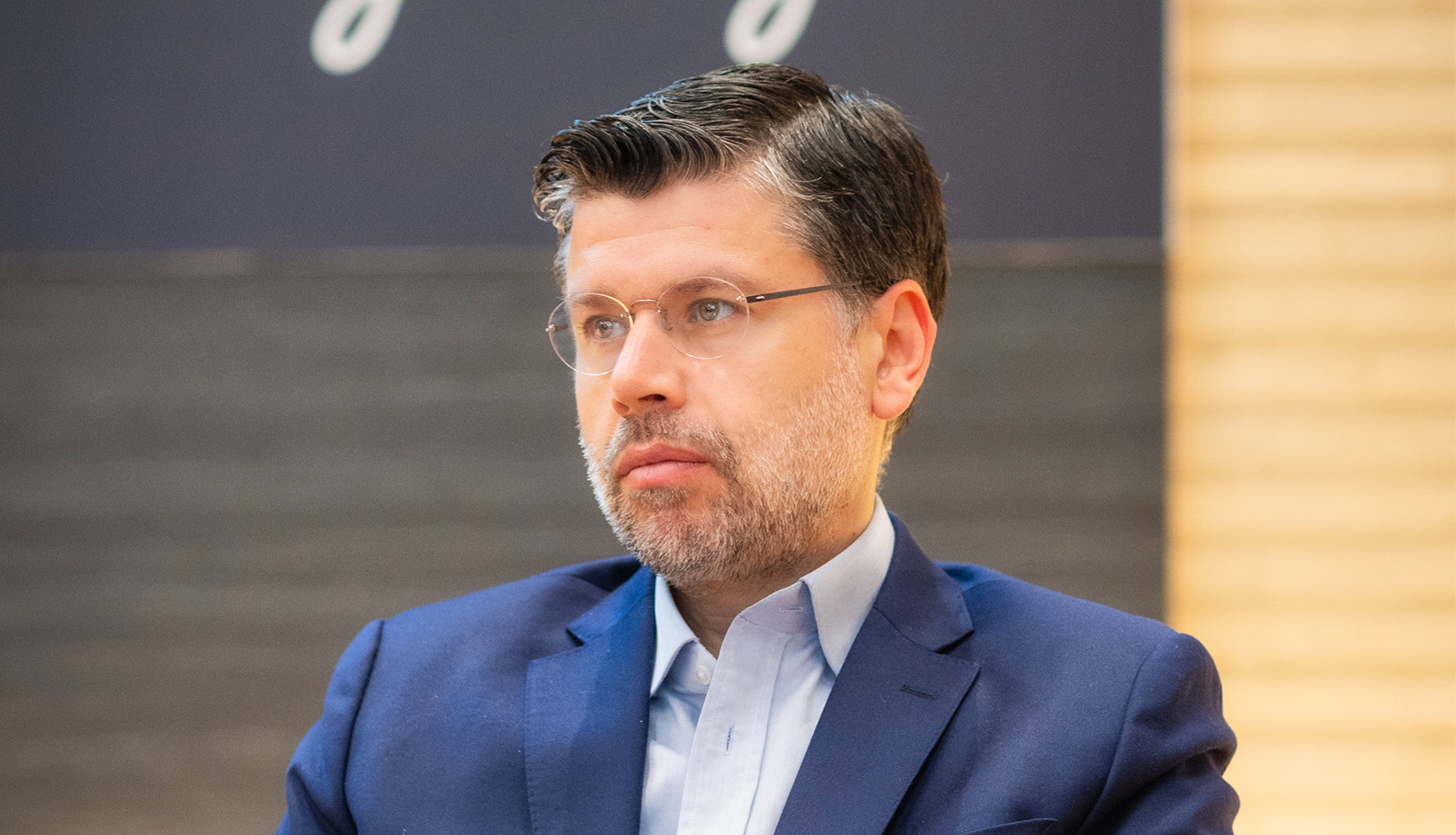
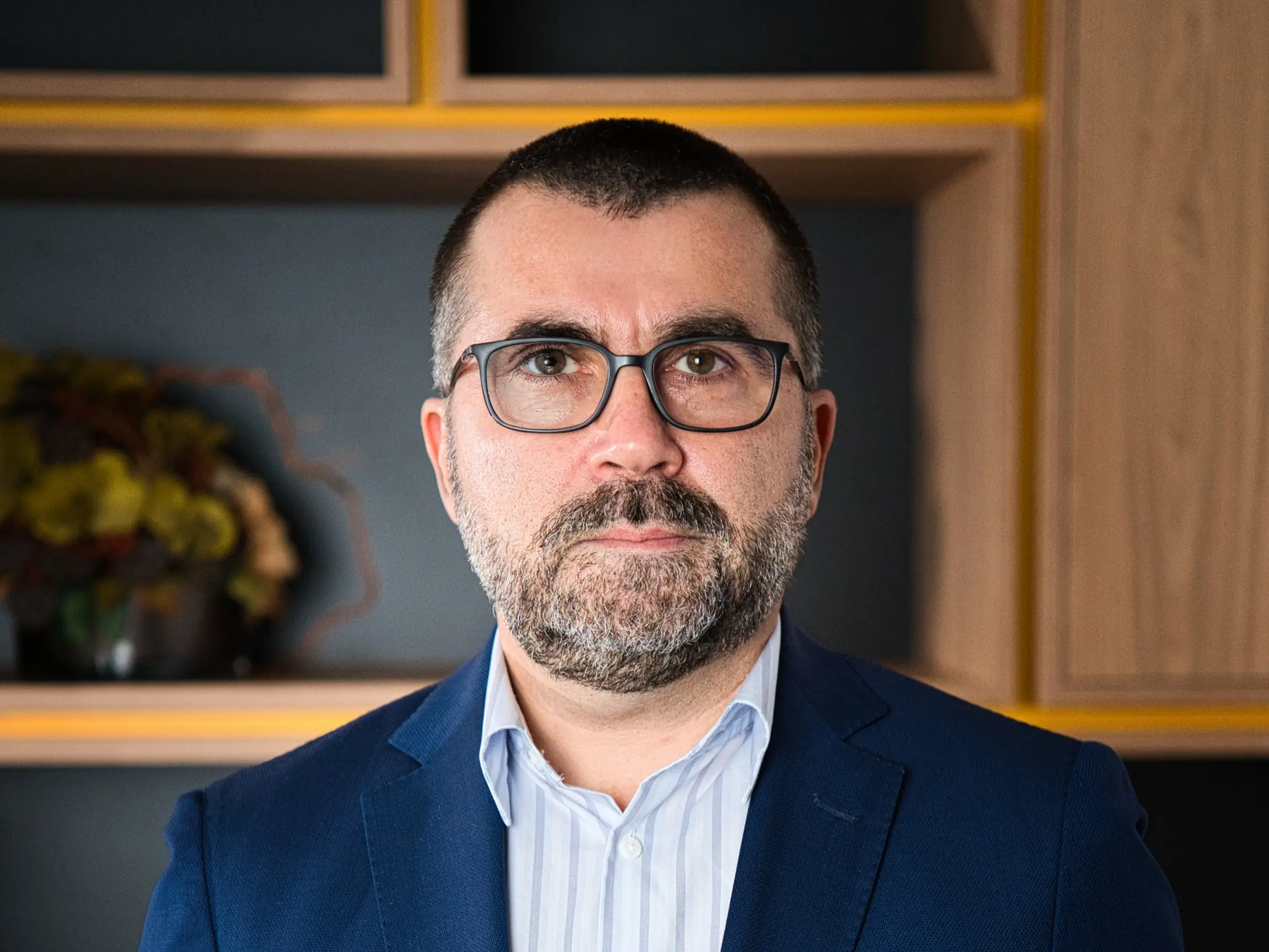
Florin Predescu Vasvari, a member of the Board of Directors of Banca Transilvania and Academic Director at the Institute of Entrepreneurship and Private Capital at London Business School, where he also serves on the Board, gave an interview to Revista Cariere, where he spoke about the hallmarks of high-performing education systems, the economic challenges facing Romania and Europe, and his role at Banca Transilvania.
Part of BT’s Board of Directors since 2022, he is also Chair of the Nomination Committee and a member of the Risk Management Committee at Banca Transilvania.
What was your educational journey like, from Râmnicu Vâlcea to your PhD in Canada, and what changed your perspective on education?
I was born in Râmnicu Vâlcea, in a completely ordinary family — my mother was an accountant and my father a technician. I lived there until 1995, when I finished the “Alexandru Lahovari” National College, the maths-physics track — the best high school in town. Then I moved to Bucharest, where I studied at the Bucharest University of Economic Studies, in the Faculty of Cybernetics, Statistics and Economic Analysis, until 2000. From 2000 I moved to Canada, where I did a master’s and then a PhD in Management, specialising in Finance and Accounting, at the University of Toronto.
During my years studying in Romania, school was quite rigid and I can’t say I had teachers who left a mark on me, who inspired me or steered me in one direction or another. Everything changed radically for me when I moved to Canada.
How does the Canadian education system differ from the Romanian one?
The education system was very different — in a way, it was a shock for me. In Romania I had high grades throughout school and I was on a scholarship at university. In those conditions, you live with the impression that if you’re at a very good university in Romania and you have a scholarship, everything will be simple abroad, that we’re much more advanced. But when you get to a top university overseas, you realise it’s not quite like that.
Of course, what I had studied in Romania was very good — that’s why I was accepted at the University of Toronto, where I had a scholarship for both the master’s and the PhD. But ultimately, the system is very different. In Romania back then, there were lots of exams and you had to be very good at reproducing the material. Abroad, the system is much different. It’s almost impossible to get a perfect score in an exam. There’s too much to read, too much to study to get a perfect grade. And when you’re used to perfection in Romania, you come to realise you have certain limits.
What motivated you to choose Canada for your postgraduate studies?
A lot in life also happens by accident. I didn’t have a plan to go to Canada. At the time, my wife — who wasn’t yet my wife and had been my colleague in Cybernetics — had the same opportunity I did, to study in Canada. So we decided to go together. We also had the option to go to America, but visas weren’t being issued. We got married a week before leaving for Canada, because otherwise we couldn’t go together. That was one of the reasons we chose Canada. In addition, the University of Toronto was the best in Canada, which is what we were aiming for, so both my wife and I did the same master’s and the same PhD there.
You mentioned the shock you felt on encountering the new education system. What did that consist of, exactly?
First, the way teaching was done — you had an enormous amount to read. In Romania, at university, you had the lectures, you took notes, the professor wrote everything on the board. If you knew the lecture notes, you’d get a 10 in the exam. When you go to a university in Canada or the US, where the system is the same, you have to read a lot of books to understand what’s being taught. The course gives you, say, 35% of the material, and you have to read the rest on your own.
Many exams aren’t just answering questions. Some exams are also oral; you need very strong communication skills, to synthesise what you’ve read, to explain or to write projects. You have to interpret, to analyse — it’s an education system that forces you to think from different angles, not just reproduce. But the fact that the material you have to learn is much larger than in Romania, with so much to read — that was probably the shock for me. No matter how much you prepared for an exam, you still had the impression you hadn’t covered everything.
How did you adapt to such an intense and different pace of study?
I think the first thing I realised immediately was that you can’t prepare only right before the exam. I don’t know how it is now in Romania, but when I was in university, you started studying when the exam session began. In Canada, you start studying on the first day you go to class and keep going until the day of the exam, which can be three to four months later. You have to stay connected to the material all the time, otherwise you fall far behind.
But there’s also a much more developed support system for students, in the sense that every class has a teaching assistant. Professors had office hours once or twice a week when you could go and talk to them or their assistant and get your questions answered. Week to week, you might have assignments to hand in — which at that time didn’t happen at university in Romania. That’s probably also why almost everyone prepared for exams only during the session.
In 2006, you chose to relocate from Canada to the UK. What drove that decision?
First, we wanted to be as close as possible to Romania. Second, we wanted to live in a big city. I had many opportunities to go to America and teach at universities there — many are in small towns. But that wasn’t the kind of place we were used to living in. For us, London was the number one priority, so I applied for a job at London Business School and got it. I teach Finance — investments in private equity funds.
How similar is the UK education system to the Canadian one?
Fairly similar. It’s just that in business schools like ours, things are much more practice-based — we use a lot of case studies. In a business school, you study many real business cases, because many of those who come here run their own businesses. London Business School has two types of programmes: the degree track, if you want to do a master’s in business or finance, and the executive track, where you come for just a week or a month.
On the executive courses side, we and INSEAD are the largest outside the US. Each year, we have around 2,200 students doing master’s degrees and approximately 12,000 participants who come for those short programmes. So when someone who is already an executive in a company comes to London Business School for short courses, you have to offer very applied content.
What prompts entrepreneurs or various CEOs to take short courses at London Business School?
They are people — including from Romania — who own businesses or want to invest money. Many of the entrepreneurs who come don’t necessarily run businesses they built themselves, but ones inherited from their families. They aren’t necessarily trained in business — some may be engineers or lawyers. And either they’ve built a business up to a point or taken it over from their parents, but they realise they can no longer keep up with market demands. They no longer understand what’s happening around them. So they come to learn. That’s what we offer: best practice from around the world. In my case, I teach them how to invest in private capital markets. Even those who had invested before coming to my class still have a lot to learn, because it’s a field where things move quite fast.
Can you give a current example of a major transformation in the business world?
For example, lately everyone is talking about how business is affected by tariffs imposed by the US. Until now, you may not even have heard of tariffs. You didn’t know what tariffs were. Add to that competition, which is becoming ever fiercer and more dynamic. In the end, every businessperson needs to raise their knowledge level to keep pace with the market and its changes.
Alongside your academic work, you serve on boards. What does that involvement entail, concretely?
A company’s board does two very important things: it sets that company’s strategy and decides how resources will be allocated over the next year, or over the next five or ten years. Of course there are other roles as well — deciding who should be in management, who to hire, and so on. It’s important for any board to have members who think independently and bring a unique perspective. If, for example, all members of a board studied at the same university and are all Romanian, then the board’s added value is limited, because everyone thinks the same way. The idea is for each board to have people who are as different as possible, so they each bring viewpoints from their own fields.
As a specialist in funds that invest in private companies, I’m used to capital allocation and I understand the field very well — that’s the expertise I bring to the Board of Directors of Banca Transilvania. I’ve also written books in this area and I teach these topics to hundreds and hundreds of people at London Business School. Being in academia — which is a bit more critical and introspective — I also bring that perspective. That’s where the questions come from: why are we doing this? Is what we’re doing efficient?
Besides the banking project that keeps you connected to Romania, are there other projects you’re involved in here?
Yes, I’m part of the investment committee of the private equity fund Morphosis Capital, which operates exactly in the area I teach: private equity funds. I believe it’s currently the largest in Romania.
Globally, the picture isn’t particularly rosy anywhere — there are many economic challenges. Do you think we’re already facing a global financial crisis?
I don’t think so. There are crises generated by external factors, like the COVID-19 pandemic. Or like the one caused by excessive investment in residential real estate, as in America in 2008. The pressure we feel now is more driven by political factors — by the US administration’s decision to impose tariffs. But that decision could be reversed tomorrow. Tomorrow, President Trump could decide to postpone tariffs by another 90 days. For now, we’re not in a crisis, in my view, and I don’t think we’ll have a financial crisis this year. Anything is possible, but I don’t think we will, because I believe Americans understand the economic implications, and we’ve already seen them sign trade agreements with various countries. But yes, the tariffs imposed by the US are a readjustment for many companies.
How does the war in Ukraine affect Europe’s financial stability?
The main impact is on energy. Europe, being very dependent on gas and oil from Russia, has suffered. But it’s a temporary impact — essentially an energy shock — because Europe didn’t pay as much for energy as it does now. Energy from Russia has always been very cheap. But America also produces a lot and wants to export to Europe. The Middle East as well. So there are alternatives that will reduce the financial pressure on Europe.
Of course, there’s also a security shock in Europe, which hasn’t worried about security as much as now in the past 40 years. The Americans guarded Europe’s security for decades. I think now is the time for Europe to take this on. I don’t know if it will succeed, but if it does, there will be very large investment opportunities in Europe, in Ukraine, in Romania. I think a lot of financial capital will come in.
How attractive are Romanian businesses to foreign investors?
I don’t know if they are attractive. I don’t see, right now, why investors would necessarily look at Romania. They’d probably look at Romania if something were produced here and re-exported to Europe. But Romania has its own problems. It has resources, but it no longer has the labour force, unfortunately, and what remains may no longer be well enough qualified. Labour costs in Romania, on the other hand, have become high and are rising every year. Wages are going up. It’s not easy to invest in Romania.
Are there other obstacles that discourage foreign investment in Romania?
Our infrastructure isn’t in good shape. Motorways are being built now, but it’s very late. And no one knows how many more years it will take before all the motorways are built. Second, as I said, there’s a labour force problem in Romania. The labour force isn’t what it was. Very many people have left. And the labour still available is quite expensive. Wages in Romania are often higher than in Italy or Greece, especially in large cities.
How do you explain that the labour force in Romania has become more expensive than in countries like Italy?
A basic explanation is that there aren’t as many qualified people left in the country as there were 10–20 years ago. Unfortunately, many leave, and they leave as early as university. There are people who stay in Romania and are very good professionally, but they aren’t easy to find. Probably five or six million Romanians have left the country — the impact is massive. I also see many kids who choose to leave right after finishing high school to study abroad, and many don’t come back. The fact that Romania hasn’t invested in the education system is a big problem.
In your view, what are the most unpredictable aspects of Romania’s economy?
I think the big problem is tax uncertainty. Taxes keep changing, and there’s no stability in Romania — perhaps also because of the budget deficit. For the business environment it’s important to have stable taxes. If someone comes to build a factory in Romania, they need to know that over the next 10–15 years they’ll pay a certain level of tax. Romania already has a very high VAT rate, social contributions are very high, and wage costs for employers are quite high. This probably also reflects the fact that there are fewer and fewer taxpayers, so those who remain have to pay more.