Ömer Tetik, BT CEO: Romania’s economy faces its next test of maturity
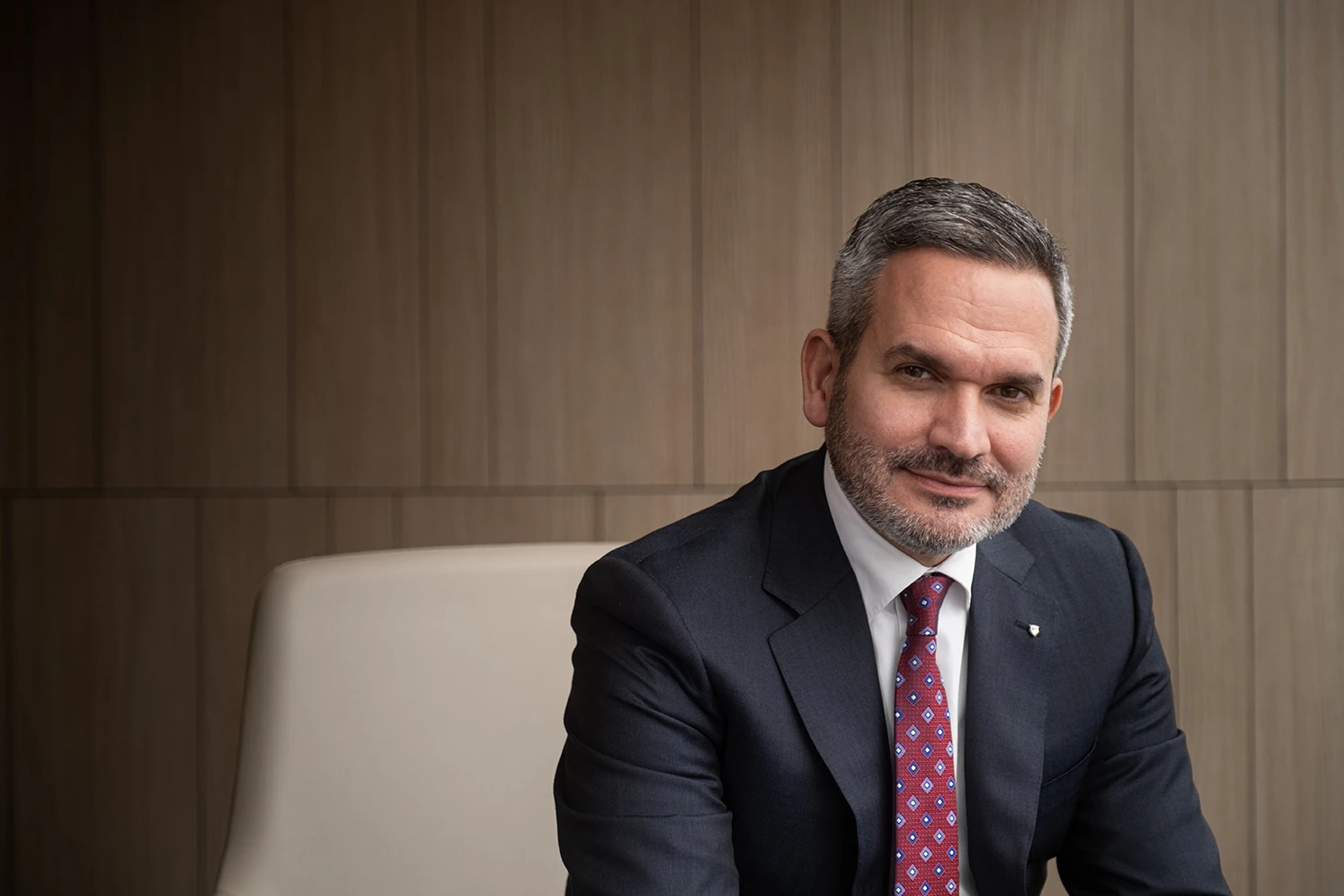
Ömer Tetik, CEO of Banca Transilvania, gave an interview to Financial Intelligence about Romania’s current macroeconomic backdrop, as well as the important role banks play in creating economic value and supporting long-term development.
How do you see Romania’s macroeconomic trajectory this year, given the war in Ukraine and the war in the Middle East, as well as the political crisis in Romania? How vulnerable is the Romanian economy to external shocks (energy, geopolitics)? When do you think a recession will be announced in Romania?
We are going through a period in which the economy is influenced by both external and internal factors — the war in Ukraine, tensions in the Middle East, volatility in energy markets, and the challenges posed by fiscal consolidation and political stability. Given this backdrop, I think the right approach is balance: acknowledge the risks without overlooking the strengths of the Romanian economy.
Romania is exposed to external shocks, but the largest challenges are domestic. If we look at the rising public debt — and especially the interest we as a country pay — that is the area we need to shore up. Investors and the business community need predictability above all. In times of uncertainty, confidence becomes an economic resource as important as funding. And right now we are also going through a crisis of confidence and we see a more conservative sentiment among people and companies.
The upside is that our economy is more resilient and far more complex than in the past. Romania has made tremendous progress in recent years, which is why I believe the vulnerability lies in our ability to respond quickly and coherently to these challenges.
As for a possible recession, I would avoid making predictions. You can’t reduce the economy to a single quarter or a single indicator. For our country, the priority should be to maintain investment and accelerate projects with major economic impact — infrastructure, energy, digitalisation, education, and support for entrepreneurship. These are the elements that make the difference between an economy that merely reacts to crises and one that emerges stronger from them. I still hope, and I believe we have a good chance, to avoid a severe recession that would significantly affect the economy over the long term.
How do you assess the current mix — still-high inflation, declining consumption, technical recession? What would be the solutions to exit this difficult situation? Is there a chance Romania could enter a sharper economic correction?
It’s a complex period for the economy, with several challenges overlapping: inflation, falling consumption, fiscal pressures, political uncertainty, and an unpredictable international context. It is natural that this generates concern, but we should understand that a period of moderation after phases of growth is not necessarily a red flag. Economies need adjustments to return to balance. The challenge is to manage this intelligently, without undermining investment and confidence in the business environment.
There is no single measure; the solution is a combination of actions. We need stability, predictability, faster public and private investment, efficient absorption of European funds and, of course, support for entrepreneurship.
As for the risk of a sharper economic correction, I believe Romania today has advantages it did not have in other difficult periods: a more diversified economy, a solid banking sector, stronger companies and access to resources for investment. We certainly cannot rule out external risks or the effects of internal imbalances, but I think the central scenario is a rebalancing.
Romania is still “catching up” with the West — at what realistic pace can we continue to do this? What should be done to accelerate real investment in the economy?
Romania has closed a significant part of the gap with Europe’s developed economies, especially over the last 10–15 years. We can see this progress in living standards, digitalisation and the development of the business environment. Even so, economic convergence is a marathon. If we manage to maintain economic stability and a strong pace of investment, we can continue to reduce the gap with the West.
To accelerate, we need to shift the focus from consumption to investment and productivity growth. The fastest catch-up economies are those that invest consistently in infrastructure, technology, education and in companies’ capacity to scale and compete in international markets. Private investment plays a crucial role. Romania needs more companies willing to grow, export and innovate. That requires access to finance, but also legislative predictability and an environment that rewards initiative and performance. We also need to make better use of local capital. Saving, investment and the capital market can become engines of economic development. In recent years we have seen major progress on all these fronts, and capital — and the capital market itself — have grown strongly and rapidly, including with the contribution of the private pensions system — we must do everything possible to ensure that the capital market continues to develop.
The difference between an economy that merely closes gaps and one that creates prosperity is the capacity to accumulate capital and turn it into investment and innovation.
The role of banks in creating economic value, in the context of overtaxation
You’ve said the banking system is already overtaxed. Where is the “red line” beyond which lending starts to fall sharply?
I don’t think there is a red line expressed as a single percentage or a single tax. The economic principle is simple: the higher the additional costs imposed on the banking system, the lower banks’ capacity to finance the economy at the same pace. A bank’s role, as we know, is to turn capital into loans for households and companies.
When an ever larger share of resources is directed towards extra taxes and contributions, inevitably the resources available for investment, digitalisation, capital build-up and, over the longer term, for lending are reduced. We are concerned about both the immediate impact and predictability. The economy needs a strong banking sector able to finance large projects. If the level of taxation significantly reduces banks’ ability to generate capital and support growth in credit portfolios, the effects will be felt across the entire economy, not just in the financial system.
At the same time, I think the discussion should not be about how much the banking sector can bear, but about how we can create the conditions for a growing economy. Banks do not finance from profits; they finance from capital and confidence — but profits are crucial for capital accumulation.
Is Romania at risk of losing regional competitiveness because of bank taxation?
Banks are among the main financiers of the economy, not just contributors to the state budget. When investors compare Romania with other countries in the region, they look at the entire system — legislative stability, fiscal predictability, the cost of capital, access to finance. If these become less attractive than in other countries, there is a risk that investment will be directed to markets seen as more competitive.
So I believe this is already happening. To be competitive we need financing and large companies that can hold their own against competitors in other countries and on other continents. To have large companies, we must be able to finance them. For that we need large banks. Higher taxation of the banking system is already reducing the economy’s competitiveness.