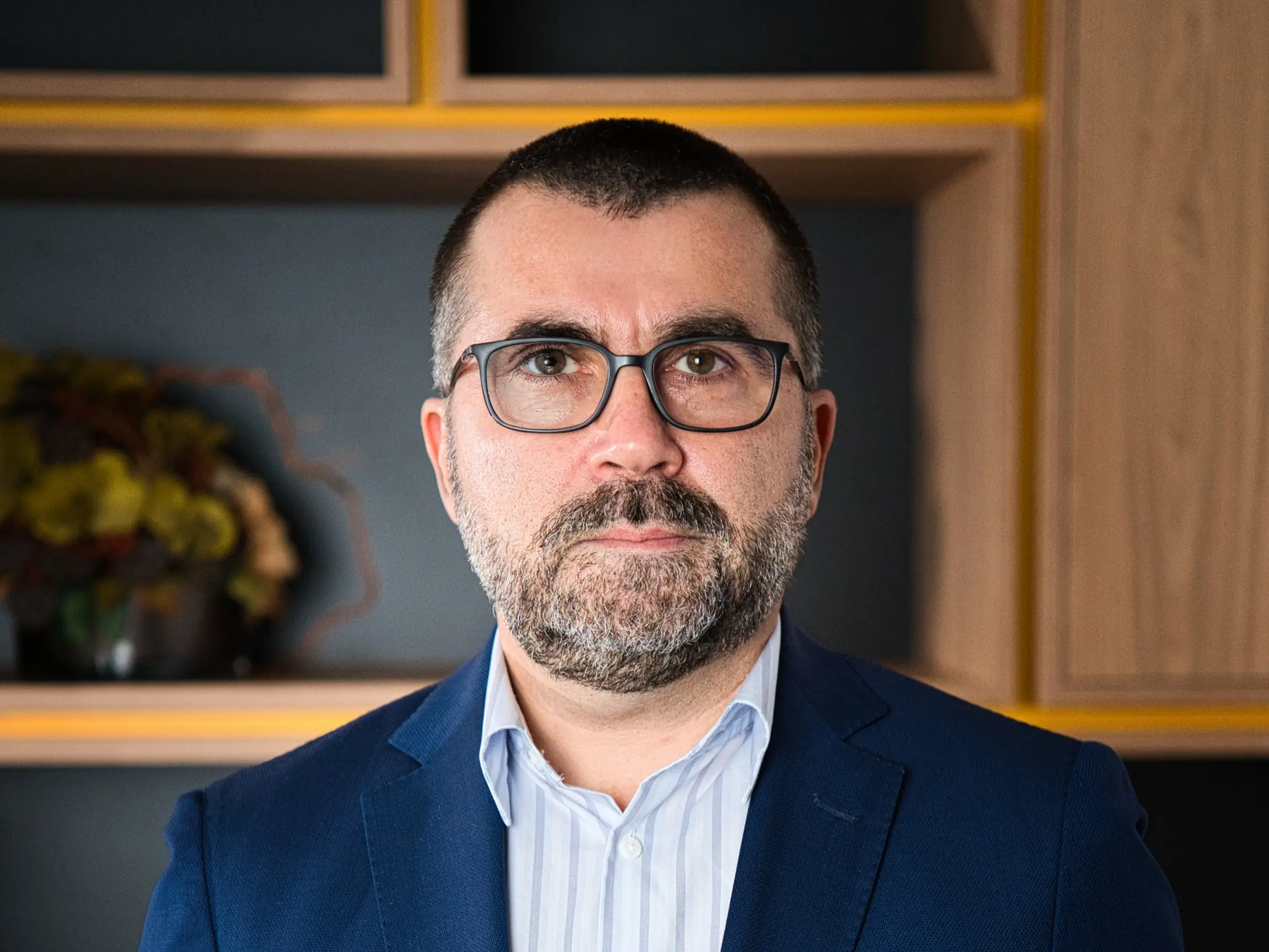
Ömer Tetik: "At BT, over the past 10 years we have more than quadrupled our loan book"
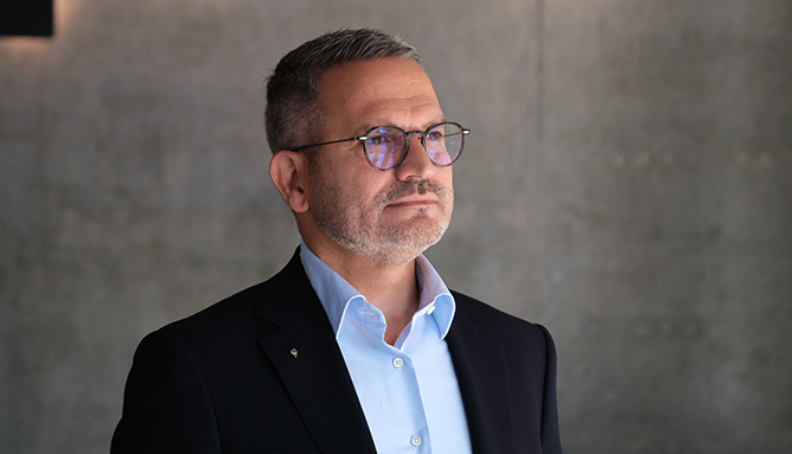
Ömer Tetik, CEO BT, gave an exclusive interview to Ziarul Financiar on the economic backdrop in 2022 and the outlook for the new year. Topics discussed included:
- the impact of rising interest rates on customers as well as on the bank;
- more selective lending in the credit market;
- plans for 2023;
- the bank’s capitalization in the new economic paradigm.
1. How was 2022 for the bank? What went well, what became complicated, where was the biggest challenge?
It was a difficult year for the financial market, one of the most volatile we’ve gone through in recent history, but we ended the year well—much better than we hoped at several points during 2022.
We started the year with excess liquidity in the banking system, with interest rates of 2% on 6‑month deposits, for example, and yields of 2–3% on government securities. In just a few months we had to manage a steep increase in our funding costs, from that 2% to 7–8%, and a sharp rise in government bond yields, in a context where Romania is the European country with the highest share of government securities held by banks. Higher government bond yields meant a depreciation of banks’ securities portfolios, and a significant opportunity cost as well—banks are paying 7–8% on deposits and receiving 2–3% on government bonds bought a few years ago.
Much of this turbulence didn’t show up on Main Street, but it had a strong impact on banks and on the financial system. I believe the banking system’s main merit in 2022 was to act as a shock absorber—taking these hits without passing them on to the real economy.
We faced many, quite diverse challenges. Right after the start of the war in Ukraine, we saw customer anxiety and a preference for cash withdrawals—a situation similar to the beginning of the pandemic. BT was the only large bank that continued to take on large‑scale cash processing. We shouldered the cash burden at a time when many banks closed branches or limited cash handling at counters, so our branches processed huge volumes of cash to support customers at an anxious moment, so to speak.
We then started to face higher funding costs, which significantly affected expenses, alongside a broad‑based increase in other types of costs—including a steep rise in payroll and, more generally, in the bank’s operating costs. Even so, we are closing the year in good shape.
2. What was the impact of higher RON interest rates on the bank’s business and balance sheet and on customers, both companies and individuals? Where are higher rates felt the most?
This rise in RON rates did not structurally affect banks’ appetite to lend so much as it increased the cost of funding. Otherwise, obviously, there was an immediate impact on our costs and then on the pricing of new loans, and subsequently on the costs borne by clients on outstanding facilities. The sharp move, especially in lending rates, required BT and our clients to be much more proactive and closer in dialogue—we stayed close to our clients to ensure their businesses remain economically viable as financing costs rose.
Across many market segments, our pricing—for both existing clients with outstanding loans and new clients—has increased by less than our own funding costs. That’s due to strong competition among banks for good clients, but also because there are strategic sectors for our market positioning where we need to maintain leadership and grow market share. I mean SMEs, agriculture, healthcare and, of course, retail lending.
In retail specifically, we saw fairly radical changes in customer behavior—greater appetite for saving and a pullback in interest in buying homes—which immediately showed up in mortgage lending volumes.
3. How did the state‑guaranteed lending programs perform? Is there a specific program the market needs?
By volume of loans granted through the government’s IMM Invest program, 2022 was a record year compared with 2020 and 2021. Through BT we granted nearly 4,700 loans totaling over 3.1 billion lei. We’re ready to continue the program at the same pace this year as well. It’s a broad program that stimulates investment, supports priority sectors—such as agriculture, manufacturing and construction—and also emphasizes innovation.
We’re glad to be a key partner for these programs and believe they are important for Romania’s economy—we need programs that drive growth by improving access to finance. In addition, everywhere in the world, for small and mid‑sized companies the cost of capital matters and is a differentiator. These programs help reduce the cost at which SMEs finance themselves.
4. What solutions does the bank offer customers in difficulty—companies and individuals?
BT has always stood by its clients—that has been a differentiator for us since the 2008 financial crisis. What matters for the client is that, as soon as they notice imbalances with financial impact, they see the bank as a partner and reach out so we can find solutions together. The goal is to help clients get through periods when incomes are lower. We work with a toolkit that includes several options—temporary reductions in monthly payments, rate reductions, maturity extensions, or rescheduling arrears.
5. How is the bank managing the government securities portfolio affected by rising rates, which ultimately impacts capital?
Romania is the European country with the highest exposure to sovereign financing—25% of bank assets are placed in financing the state. In our case, we have taken on an even larger exposure to sovereign financing, but we have sought to protect ourselves from the curve inversion and, especially, to keep a much shorter average maturity, of around three years.
Opting—deliberately—for short maturities helped limit the overall depreciation of the portfolio, but the impact is still considerable, particularly due to the opportunity cost of paying clients much higher rates on deposits than the yields we earn on the securities.
At the moment there are a few shortcomings in the government bond and broader financial markets that affect us too. First, it would be ideal for the state to correct deficits through more efficient tax collection, and then to finance its deficit mainly in local currency, which better manages subsequent risks related to FX and public debt itself. However, Romania’s government bond market is small and lacks depth; the main players are banks and pension funds—so RON‑denominated financing is not always possible, especially at the volumes current deficits require.
In periods of uncertainty, instability or recession, it’s crucial for banks to have the resources to finance the economy and thus the recovery and the start of a new growth cycle.
The depreciation of bond portfolios caused by rising rates consumes part of these resources, and we now see large banks looking to issue subordinated bonds that can be counted as capital and used to support loan growth. I think it’s very important to see not only the development of the government bond market, but especially price stability. As I said, that requires better tax collection and public spending reform.
6. What is happening with the 4.4 billion lei subordinated bond issuance program for capital needs?
BT’s shareholders approved a general framework for issuing subordinated, MREL‑eligible bonds. The framework includes a maximum amount within which we have flexibility to obtain the most favorable market terms. Especially since this is a multi‑year program, we do not need these resources immediately—neither for capitalization nor for liquidity—given our very good loan‑to‑deposit ratio. We have ambitions to grow the bank and strengthen the BT Financial Group. To support this growth we need all available resources (including capital raised via bonds). We will decide based on market conditions when we can obtain the best pricing for these issues. We are not in a hurry.
7. Does the bank need a capital increase, or will it secure capital through subordinated bonds?
At BT we have grown rapidly and will continue to grow—in the last 10 years we have increased the stock of loans more than fourfold, from 15.5 billion lei to 64.4 billion lei. To support this growth we have capitalized over 5.1 billion lei of profits.
We have ambitious growth plans for the coming years, and to support them we will need capital—either from retained earnings or bond issuance. It will likely be a mix.
It is important for Romania’s economy and for the population as a whole that banks are profitable and well capitalized, so they can finance the recovery through lending.
The 5.1 billion we have capitalized in recent years is a very large amount, with a much larger multiplier effect on financing the economy—this additional capital gives us the capacity to grant loans to the economy in the tens of billions of lei.
8. What are the first estimates for 2023? What are the bank’s analysts saying about the macro data?
In 2022 we witnessed a fundamental shift in the macroeconomic environment—the kind of radical change that happens only every few decades. We moved from an environment of very low rates, low inflation and globalization to one of very high inflation, higher interest rates and nearshoring. It’s a fundamental, structural change, and the new macro anchors are here for the long haul. It’s a paradigm shift we have to get used to and adapt to. The change in these major anchors—inflation and rates—will obviously influence other economic indicators, from property prices to private consumption.
9. What are the bank’s forecasts for 2023?
We are optimistic about BT’s trajectory in 2023, but cautiously so. To use a metaphor—we’re walking on ice, so we prefer to take small steps. But we are moving forward.
We are well positioned with our clients across several segments, and we see that the bank is appreciated by clients and they like working with us. We have a very strong position in the micro, SME and mid‑corporate markets, as well as in specialized sectors—healthcare and agri. Some of these will benefit from public investment and EU funds, and we want to capture value there. There is a big gap versus Western Europe in healthcare—investment is needed, and we have the know‑how to support clients. Another important topic on the public agenda is food security—we are leaders in agri financing and will continue to grow and benefit from the major investments coming there as well.
In retail we have reached network effects in a few areas—BT Pay is the banking and payments app with the most users in Romania, and the STAR program is the largest ecosystem of merchants and credit cards. We have significant room to grow in segments covered by BT Group companies—from leasing to pensions or asset management. We are optimistic, although, as mentioned, we expect volatility and the fundamental shift in macro anchors to persist. We have the best team and the most loyal clients. That’s what matters most in banking and services in general.
10. How will RON interest rates evolve? When will we see stabilization? When will they start to fall?
As I said, we believe 2022 brought a radical and lasting shift in macro anchors—a paradigm change—and we do not expect a quick return to the pre‑2022 status quo. RON rates depend on many external factors we cannot estimate precisely, but even in an ideal scenario they are unlikely to fall sharply. That’s why we think the most likely scenario is stabilization—which we are already seeing—followed by a gradual, moderate decline over the next few years.
11. Which sectors will the bank target for lending in 2023?
Banca Transilvania will continue to be a main financier of Romania’s economy and we have most sectors in view. Naturally, SMEs and mid‑sized companies are a focus because we have unique capabilities in the market and our extensive network helps us reach places other banks don’t.
We are also looking at agribusiness and healthcare, where we have a very strong position. We bring viable solutions tailored to each sector’s specifics and want to meet the significant financing needs there. We are also leading financiers of trade credit—including through our factoring and reverse factoring programs—and we want to continue growing.
In retail we have a very strong position in cards and payments. We have the most attractive merchant network and the best merchant‑centric loyalty program, which will help us continue to grow in credit cards—a segment we see as resilient, even if appetite for other types of loans declines.
12. What is the bank’s appetite for real estate in 2023—developer financing and mortgages for individuals?
We will continue to finance real estate projects. In selecting them we look at developers’ capacity and track record in delivering projects, at financing urban regeneration projects and those with a high degree of energy efficiency. It is also important to see projects that bring urban or social value‑added to the communities where they are developed. In short, we look for quality projects that are viable in a context where people’s preferences are shifting toward higher‑quality living spaces.
As for financing purchases by individuals, that continues and we are keen to move forward, but weaker demand is evident—both due to uncertainty and given the rise in IRCC, which reduces the amounts people qualify for. We are continuing mortgage lending; conditions are fairly standardized across banks, and the differentiators are more about service quality and pricing.
13. What is the bank’s appetite for a new banking acquisition or for loan, deposit or client portfolios?
As in recent years, we are open and attentive to potential acquisition opportunities—whether in banking or adjacent areas—but we are not in active discussions at this time.
14. What are the targets for the leasing business after the acquisitions made?
We have three major and very ambitious objectives for BT’s leasing business—to become the leader in the leasing market, to increase the use of leasing among BT Group clients and to support the transition to a green economy.
In recent years we have made three acquisitions—ERB Leasing in 2018, Idea::Leasing in 2021, followed last year by Ţiriac Leasing, for which we will soon announce the merger with BT Leasing. Each brings something to the table and helps with one of the stated objectives.
15. Across Europe, additional taxes are being introduced, and there is now talk of extra taxation of bank profits. What is the situation in Romania?
There have been discussions in several European countries, but apparently there are more drawbacks than benefits, and the gains are limited. So far, a very small number of countries have adopted concrete measures and introduced such taxes. Romania is an emerging country and needs capital to develop. To build hospitals, schools and roads with EU funds we need co‑financing. In other words, we need public investment in infrastructure and private investment in healthcare and agriculture. To increase life expectancy and quality of life we need investment in both public and private healthcare. To improve food security and lower food prices we need investment in agriculture and food processing.
For that, banks need to be well capitalized so they can finance the private sector and co‑finance public investment. In addition, PNRR projects need co‑financing; otherwise, they will not be implemented.
In banking, profit is a source of capital because profits are retained. To give you a sense—with rough numbers—under today’s very strict capital requirements, at BT alone we need to capitalize over 1 billion lei each year just to be able to grow lending by approximately 10% annually.
Profits retained by banks in general increase their lending capacity, and with that additional financing investments are made and economic growth is generated.
That is the role of banks—increasing the money multiplier in the economy to support growth, investment and development. Romania needs investment, and to finance it we need profitable, well‑capitalized banks.