Sergiu Mircea, BT, in Biz magazine: At the Intersection of Business and Marketing
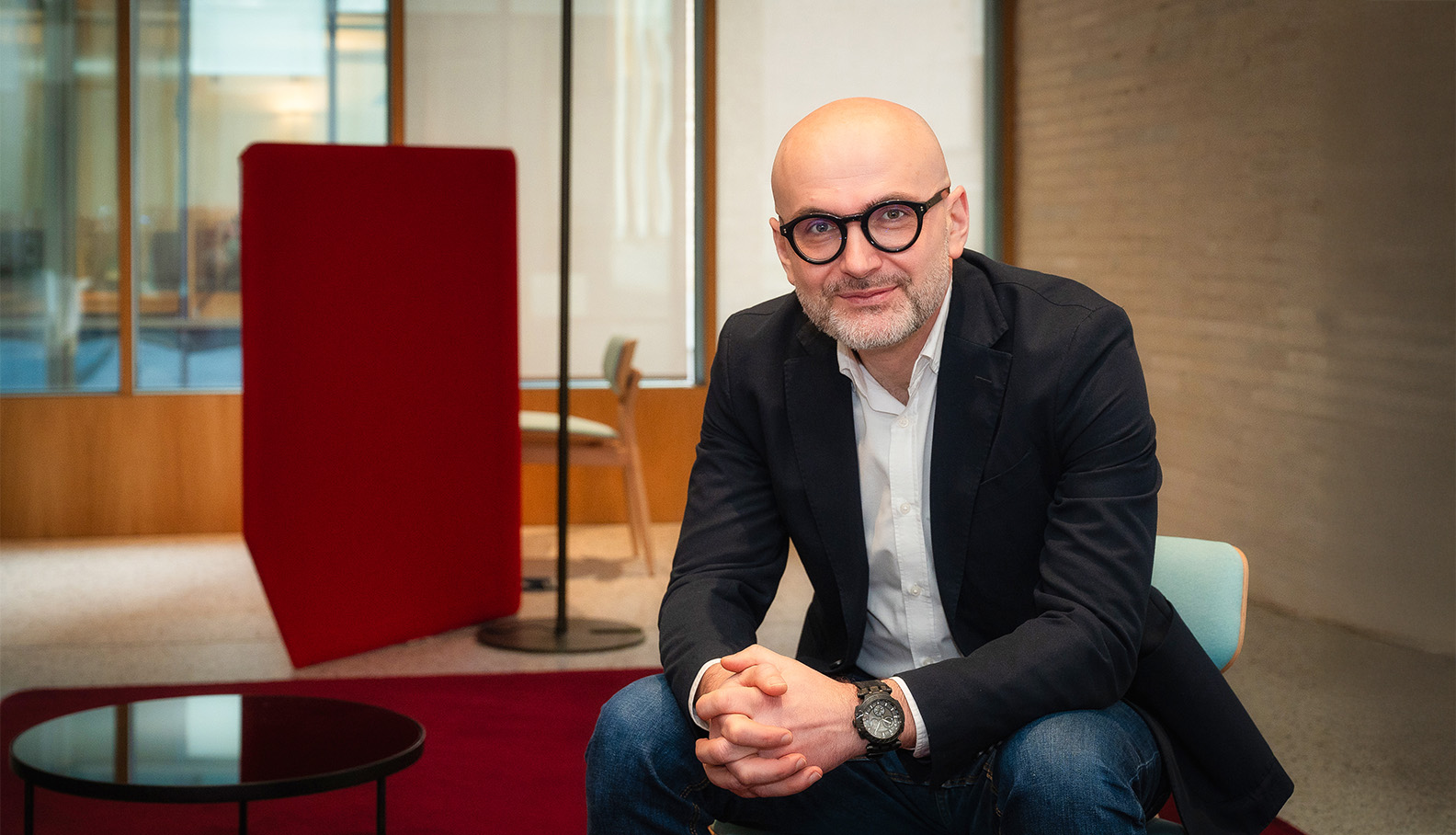
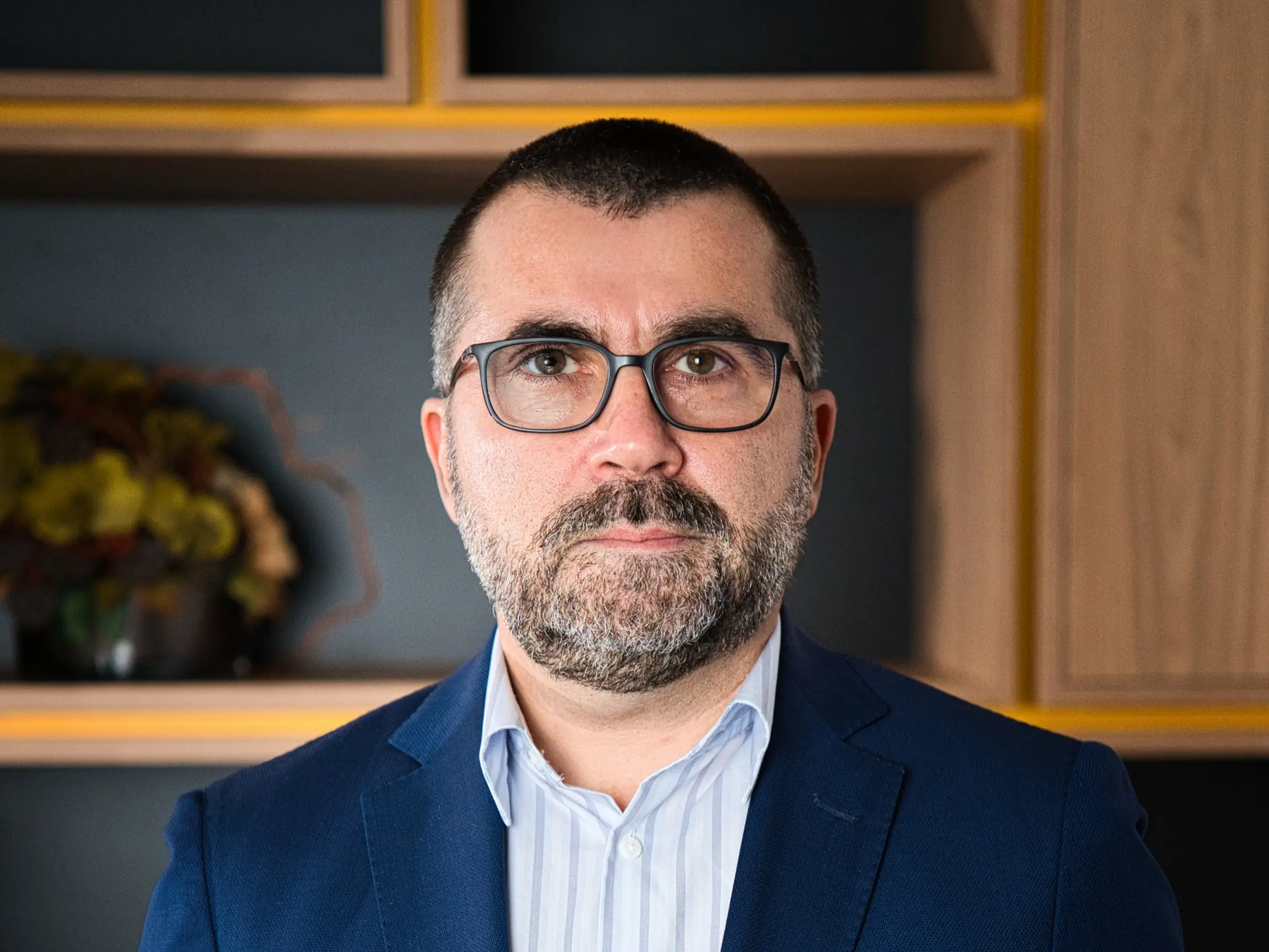
Sergiu Mircea, Executive Director, Marketing, Communications & Customer Care at Banca Transilvania, gave an interview to Biz magazine about marketing in banking.
How did you get into marketing? Was this the career you wanted?
Yes. For me, marketing and the world of business are a dream come true. I wanted this since high school and university, and I’d say I was passionate about business and marketing from early on. Of course, back then, 20‑odd years ago, business looked different and the corporate landscape in Romania (especially in Cluj) was much more limited. Not to mention our access to information, which was far more limited and local (less global). But marketing has been a dream fulfilled for me.
How did you learn marketing? Were there people who shaped your career — mentors, leaders, colleagues — from whom you learned essential things?
I’d say I learned marketing at BT, and also through how I personally approach curiosity and self‑learning. I was also lucky to join BT 22 years ago, at a time when the bank was expanding fast — a modern, highly ambitious company with incredible pace and growth. That helped a lot.
First, it helped because there was a lot of work to do — that imposed a rhythm, and rhythm matters, especially when you’re young. It’s important to be in a company that gives you discipline and the opportunity to keep up a strong pace, stay dynamic and be efficient. BT gave me that rhythm. It also helped that it was a company with young, ambitious professionals I could learn a great deal from. And the fact that over the last 20‑something years BT has grown significantly — that’s a great thing for any professional, but especially for someone in marketing: working for a company that’s growing. There are more opportunities, a certain pace is set, and it feels good. You can see and feel the growth, and that helps.
I’ve also been fortunate to meet, in the bank and across our partner ecosystem, people I’ve learned enormously from — true mentors, then and now. In general, BT has a unique DNA that blends courage and initiative with curiosity and the ambition to keep developing. From that perspective, I’ve been privileged to work with incredible people. I’d add how important it is for an organization and its hierarchy to be built on trust, decentralization and empowerment. That helps us enormously — because when the organization trusts you, taking ownership of decisions and having the courage to do things becomes much simpler.
What do you like most about this field?
In general, I think marketing and communications in banking sit at the intersection of business and marketing, and are much more business‑oriented (versus marketing or advertising) than in other sectors and company types. You can’t really communicate well for a bank if you don’t understand deeply how the bank’s business works, the economy in general, and then our clients’ businesses. That’s one of the things I like most in my current role.
Beyond that, I strongly believe Banca Transilvania is a company with a strong sense of meaning and purpose beyond business — a company that plays an important role in the country’s economy and genuinely contributes to Romania’s progress. It’s a company with a mission. That’s wonderful and extremely motivating for me, and, generally, for all our colleagues and partners.
Which campaign are you most proud of?
I’m proud of our campaigns, but even more of the team and mindset we’ve built in marketing and communications at BT. We have a very strong team — a blend of experience and know‑how with very young people who understand trends and have the energy to compete. On this foundation we built a mindset where we do most of our communications strategy in‑house, and we also execute a lot. We’ve shifted from an operating model of a few big campaigns a year to a larger number of tactical or mid‑sized campaigns that we deliver in much shorter timeframes, even in real time.
If I were to highlight a few campaigns — I’m quite proud of our brand campaigns, especially those around BT’s rebrand almost 9 years ago. I’d add our positioning campaigns for the bank and our December 1 campaigns, which have become a tradition and are eagerly awaited, because they convey our message.
How much does budget matter? And what about the strategies you choose?
Budget matters, obviously, but so does how efficiently you allocate it. I mean both the campaign strategy and the messages used, as well as the media you choose. We’ve almost always had a fairly contrarian approach to advertising spend — we were among the first large companies in Romania to invest heavily, even disproportionately, in social media and influencer marketing.
We were also among the first companies to back major events and music festivals — because we want to be where people are. And even now, we’re among the companies that support journalistic projects, as we did a few years ago. We’re not dialing back that support, because we believe the way people interact with information is one of society’s biggest issues right now, and we want to contribute to the health of journalism and how people get informed.
How important is it to take ownership of what you do?
It’s the most important thing — but I think it depends more on how the company you work for is built, on its organizational structure and culture. I don’t think you can do great work if you’re not in a company that trusts you and supports you in delivering bold communications. Consensus‑based decisions, or strategies and executions that follow the crowd, have little chance to differentiate and won’t be noticed by customers.
How do you explain that so many professionals in this field have changed? Is it a generational shift or also one of perspective?
Communications is a field where things change very quickly. Trends move much faster here. That’s why solutions that worked in the past are unlikely to work in the future. Just think of the last few years: we moved from a period where communication was predominantly on TV and outdoor, and celebrities lived exclusively on television, to a society where communication is heavily based on social media.
Think about how, a few years ago, “fake news” wasn’t in our vocabulary, nor did we have TikTok or Instagram. These are structural changes, not just shifts in media channels. Anyone who treats these structural shifts as mere tactical changes will struggle to deliver authentic, channel‑appropriate campaigns that gain traction in the market. It will be hard to stay relevant — to be where it matters for customers, for the company and for the messages delivered. Marketing and communications are fields that require constant reinvention.
Can you give examples of campaigns that impressed you?
Generally, I’m a believer in brand building — positioning and brand campaigns. Our mantra is to build a strong brand, running many campaigns that support the brand, with product campaigns playing a supporting role. Probably for that reason, we look closely at companies that build powerful brands with aspirational, relevant advertising and an authentic voice. One company I’d single out here is Nike, which relies heavily on an aspirational brand built with relevant advertising at key moments and a very broad roster of ambassadors.
How would you describe Banca Transilvania’s marketing philosophy? What sets BT apart from other banks in Romania in how it communicates?
First, we have a significant advantage because we’re a Romanian bank, decision‑making is local, and Romania is our main market. We have this “home market advantage,” which helps us understand the market better and connect more deeply with local communities. Our communications strategy rests on two main pillars. On one hand, “we stand for something” — BT is a company with strong values, attached to Romania beyond business itself. We want the country and communities to do well, and we care about the common good beyond business. We reinforce this pillar with aspirational campaigns that inspire people in Romania to move the country forward together.
On the other hand, we build on a “fashionable” pillar, starting from the premise that part of our relationship with the bank is now on the phone, and each of us is quite selective about the apps and brands we download. It needs to be a cool, fashionable brand. Here we lean on advertising, social media and celebrities — a mix that allows us to build the image of a bank that’s up to date and in step with our customers. We also build through our presence at events and everything we do to show up for young people and Gen Z, where we also have a dominant market share.
I’d also say we’re different in our contrarian approach to the channels and ways of advertising and communicating that we use — much more focused on interaction, engagement and content, and less on mass‑media ads.
What are the key values you aim to convey through BT’s campaigns? How do you adapt them to different audience segments?
In our communications and brand campaigns, BT talks a lot about Romania. We try to inspire the country and Romanians to believe in our own strength and to have the courage to build big, meaningful things. To evolve and grow together. That’s how we see the bank’s role in society — a multiplier role which, through our activity and through financing the economy and individuals, brings prosperity and helps close the gap between Romania and the West. That’s the message, and from it I think we derive the key values we communicate.
Tell us about a recent or emblematic Banca Transilvania campaign that won an award, and the story behind it.
We prefer other forms of recognition instead of awards — without trying to make that case ourselves. One series I’m especially attached to is BT’s positioning campaigns for the National Day, which we launch every year on December 1. These campaigns are very important for us because they reinforce our core positioning — to inspire and support Romania. In this series we’ve talked about hard work, courage and self‑determination with ambassadors like Simona Halep, Gheorghe Hagi and other major Romanian athletes who have the authority to show that when we truly want something, we achieve it through work and determination.
If I were to think of a recognition that honors us, Banca Transilvania is ranked in Brand Finance’s brand valuation league table with a value of USD 950 million, and, more importantly, BT is recognized as the world’s third‑strongest banking brand by the brand strength indicator.
I’d say the biggest challenge in banking marketing and communications is brand relevance and message authenticity. We live in a world where technology and social media have democratized communications — but also one where people are less receptive to messages that feel artificial. That’s one reason why we’re seeing more and more corporate communication, yet it’s becoming less relevant and the public values it less.
Three achievements you’re most proud of?
The team we’ve built here in marketing and communications at BT, and the mindset focused on transparency and authenticity that I’ve helped shape. Major campaigns the bank has run, from BT’s 2016 rebrand to the December 1 brand campaigns and the campaigns with Simona Halep. Partnerships BT has with several emblematic ambassadors, as well as with many media outlets and journalists.
How do you see banking marketing evolving over the next 3–5 years? What role do technology and data play in this process?
Technology clearly plays a major role, and we see it on multiple levels. First, we look at how we communicate and interact with our customers — communication has completely changed. If a few years ago it was face‑to‑face and we were talking about a retail experience (branches, in our case), now a large part of communication is in‑app or digital anyway. On the one hand, that means companies need different technology capabilities; on the other, marketing and communications teams need different skills. We need colleagues who understand, with empathy, what a client’s in‑app journey, needs and anxieties look like, and who can operationalize effective in‑app or online communication.
On the other hand, client targeting capabilities are much better as advertising has shifted from broadcasting to online engagement channels. Along with this shift, we’ve seen communications and advertising reorient from brand to product — including many budgets moving into online performance marketing. Relationships have become much more transactional, with much shorter‑term marketing objectives.
Technology’s evolution also brings significant challenges for society. The way we interact with information has changed radically in recent years, creating all sorts of challenges — from simpler ones (how we choose the channel mix and allocate budgets) to more complex ones like fake news, disinformation, the use of social media by bad actors for online scams and phishing, or brand safety on platforms.
Just as challenging for us in marketing and communications is that information and brand comparisons are far more globalized now — customers compare BT’s Instagram with Netflix’s Instagram. It’s a tougher market where local marketers need to be increasingly good at what they do, regardless of the size of the company they work for.
How does marketing in Romania stack up against other markets?
This is an area we’re quite proud of, and I think Romania does very well. I don’t think we’re behind other markets at all. We have large companies and very good marketing, we have very strong agencies that compete globally, and we have quality content created in social media and on TV. Most importantly, we have great professionals — cosmopolitan, exposed to international environments, young people with the ambition to do excellent work. And we’re quite well connected to trends in bigger, deeper markets than ours.
What advice would you give young people who want to work in marketing, especially in complex industries such as banking?
At BT, in the areas I coordinate, we work with many young people, because our strategy has been to grow a lot of talent in‑house, and in this sense we’re a bit of a talent factory for Cluj. I can tell you I’m extremely pleased with the generations coming after us. They’re very talented and knowledgeable — much more exposed to information and know‑how than we were when we finished school. I’m genuinely confident and optimistic when I look at the next generation.
As for advice, work — a lot of work — plus curiosity and a desire to learn and get better are decisive factors for anyone who wants to do meaningful, long‑term work in marketing. Marketing and communications are fields where knowledge — what you know about the craft — is perishable and has a very short shelf life. Various studies say that in marketing the paradigm changes radically every two years. That means those who want to be good in the field have to be good at adopting the new paradigm and willing to challenge themselves rather than stay anchored in the past.
I remember a relevant quote from Keynes: “The hardest thing isn’t having new ideas, it’s letting go of the old ones.” To stay current and catch these trends, you need a lot of work, a continuous‑learning mindset and a high willingness to put in the effort. I also believe it’s very, very important to read a lot, so you can absorb as much of the new information as possible and stay connected to the market, to reality and especially to customer feedback.