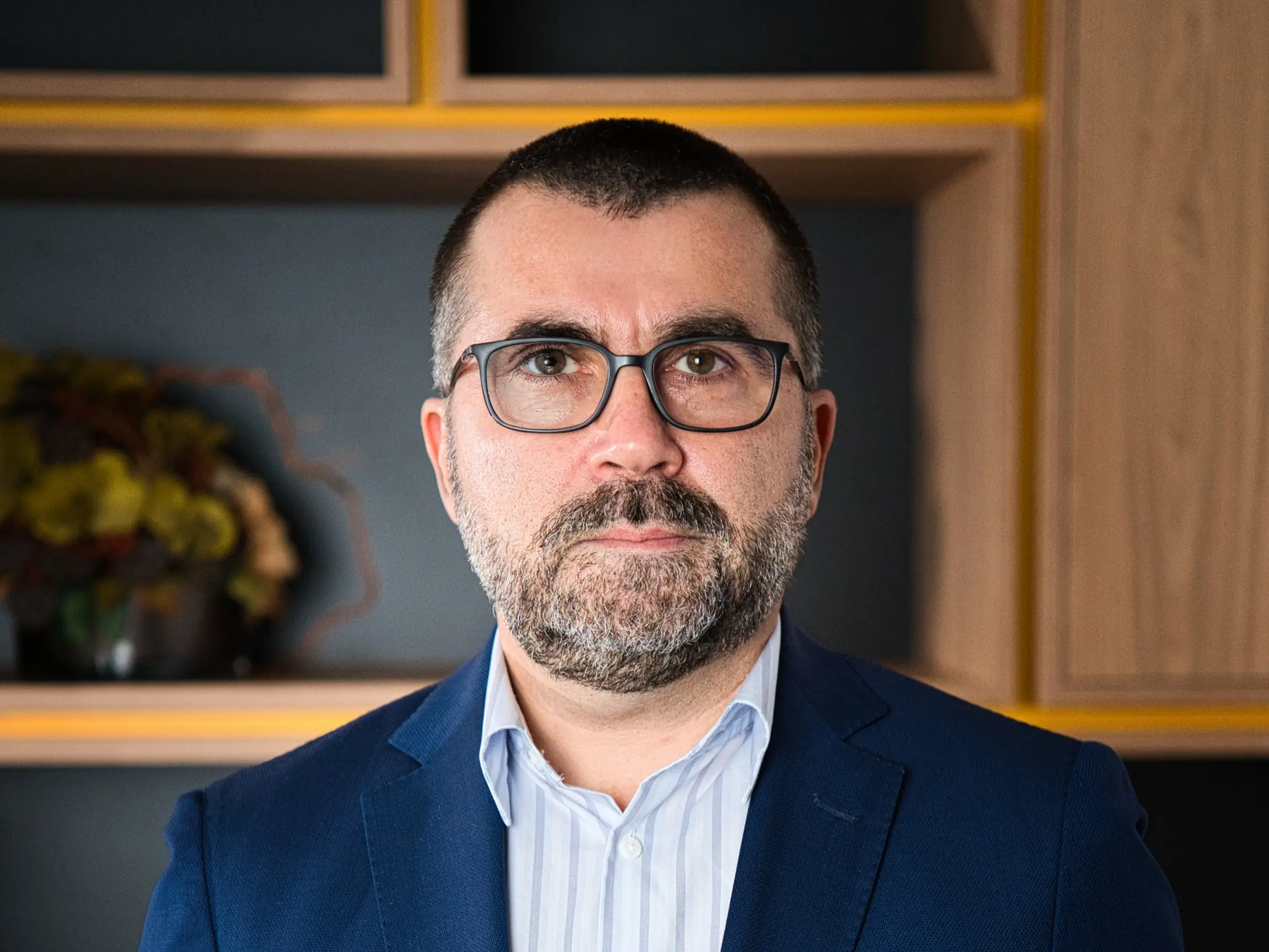
Bogdan Pleșuvescu: "We want to enhance synergies across the BT Group and become leaders in every area"
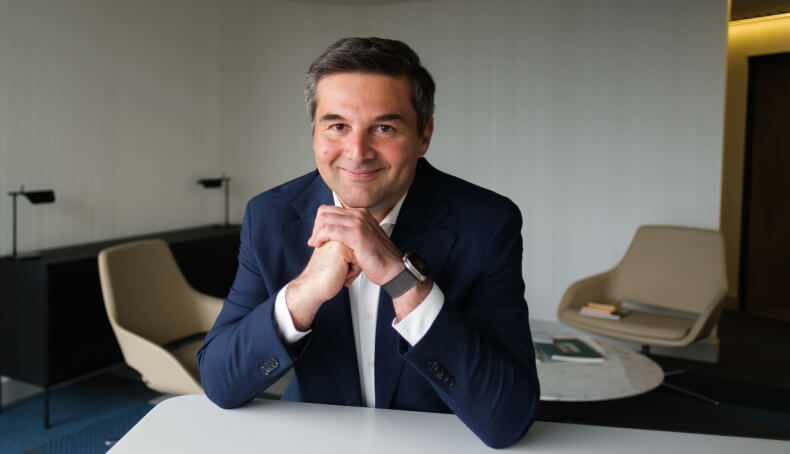
Bogdan Pleșuvescu, Deputy CEO, Legal, Banca Transilvania, gave exclusive comments to Ziarul Financiar about his mandate in the Republic of Moldova (2018–2023) as CEO of Victoriabank, part of the BT Group. Last week, Victoriabank announced it had officially closed the acquisition of BCR Chișinău from BCR.
We are republishing the full ZF article, Over the five years I led Victoriabank in the Republic of Moldova, I managed to turn the bank around, the NPL ratio fell from 33% to 4%, and cumulative net profit reached almost 115 million euros
Bogdan Pleşuvescu served as CEO of Victoriabank in the Republic of Moldova for 5 years and now oversees Banca Transilvania’s subsidiaries division (leasing, microfinance, investments, insurance brokerage), with a mandate to bring them to a leading position in their market segments.
For Bogdan Pleşuvescu, who in 2018 was sent to Chișinău by Banca Transilvania to restructure Victoriabank—which had a complicated past and a fragile financial position, with non-performing loans of 33%—the closing of the acquisition of BCR Chișinău marks the successful end of a challenging mandate in a very tough banking market, in an economy that is now trying to find its path toward the European Union.
I became CEO of Victoriabank in 2018, after Banca Transilvania acquired a stake, with a mandate to turn the bank around and to integrate and align it to the BT Group’s corporate governance and business model, he said, answering one of ZF’s questions.
After a 5-year mandate (2018–2023), Victoriabank’s assets increased by 51%, reaching 1.1 billion euros (Banca Transilvania has 30 billion euros in assets), deposits were up 34%, the loan portfolio grew by 83%, and shareholders’ equity by 98%. Cumulative net profit retained and not distributed as dividends over 2019–2023 is approximately 115 million euros.
Another change was to transform Victoriabank from a corporate bank—80% corporate loans in 2018—into a universal bank, where by 2023 the portfolio mix had shifted to 60% retail and 40% corporate.
But, Pleşuvescu says, the most important achievement is the considerable improvement in portfolio quality, with the non-performing loan ratio posting an exceptional trend, from 33% in 2018 to 4.4% in 2023. My mandate also came with challenges, mainly stemming from Moldova’s economic environment, the pandemic, the war in Ukraine, the energy crisis and high inflation, but together with the team we built there, we got through all of them successfully.
For Victoriabank, this year’s priorities are to integrate BCR Chișinău—a process that will take 6 months—continue growing the leasing company in the Republic of Moldova, BT Leasing Moldova, which is the market leader in auto, and to focus on Moldova’s obtaining EU candidate country status, which could open up new opportunities, he added.
The Republic of Moldova has GDP of 12 billion euros and one of the lowest GDP per capita levels in Europe (5,000 euros), and its economic growth potential is fairly limited given the war in Ukraine, geopolitical tensions and the large number of people who have left the country.
The banking system in the Republic of Moldova is small relative to GDP and is concentrated around four players, which together control more than 80% of total banking assets and total loans. Victoriabank ranks third in the market.
We have built a solid foundation at Victoriabank and opened the way in digital—80% of transactions now take place digitally or electronically—as well as in cards, transparency and corporate governance.
Last year, Bogdan Pleşuvescu, who has 23 years of banking experience, returned to Banca Transilvania as Deputy CEO, Legal (vice president), an executive member of the Management Committee, and from this position he coordinates all subsidiaries of the Banca Transilvania Financial Group.
My mandate now at Banca Transilvania is to increase the synergies between the subsidiaries and the bank and, above all, to become leaders in every business in which the BT group operates. Just as Banca Transilvania sits at the top of the banking league table, so should our leasing, microfinance, investment, insurance brokerage or debt collection companies.
For all these subsidiaries there are plans for sustained growth so that their results make a meaningful contribution to the financial performance of the Banca Transilvania Financial Group.
Results at the end of 2023 show a record-high contribution of subsidiaries to the BT Group’s profit, he says.
Are there plans to enter other foreign markets?
Geographically, we are at the stage where we are learning from the environments where the BT group is present now, namely in Italy and the Republic of Moldova, but our main market remains Romania. For now, we want to strengthen business synergies in the markets where we operate, because there is very significant growth potential that has not yet been fully tapped.
Before being sent to Chișinău, Bogdan Pleşuvescu headed the Credit Recovery and Restructuring Division at Banca Transilvania, an experience he drew on at Victoriabank.
At Banca Transilvania, the Credit Recovery/Restructuring Division, in its current form, was set up in 2013, when I joined BT as Executive Director. It was a time when the effects of the 2008 financial crisis were still visible and had affected many large businesses. Together with the team we adopted turnaround standards suited to those companies and managed to salvage many of the non-performing exposures back then. Essentially, we got clients to a more comfortable, manageable place, where they were saved and able to scale their businesses.
Thanks to the acceleration in economic growth—which also drove companies’ business—Romanian banks managed to recover after the complicated 2013–2018 period, when they were flooded with non-performing loans (at the peak, the Romanian banking system had an NPL ratio of 23%). The economic picture has changed over the past two years: growth has slowed, higher inflation has hit everyone, and Romanian companies are starting to feel this through weaker sales and deteriorating financial positions, all of which ultimately shows up at the banks.
The economy is cyclical and we must prepare for periods of turbulence too, when the number of customers in difficulty rises. For the moment, this is not visible in the market, but in banking we have to be as prudent as possible, and the current economic backdrop calls for vigilance. Changes in fiscal policy, inflation, the fact that it is an election year and the geopolitics—all of this mean we must take care not to be caught off guard. We stay close to clients and, if problems arise, we offer tailored restructuring solutions. We support them so they can get through periods of financial strain caused by, for example, a drop in income for the customer or their family, medical issues, a change of employer, and the list can go on, because life is unpredictable, Pleşuvescu noted.