Daniela Secară, BT Capital Partners: The costliest mistake in investing isn’t missing an opportunity, but letting emotions drive your decisions
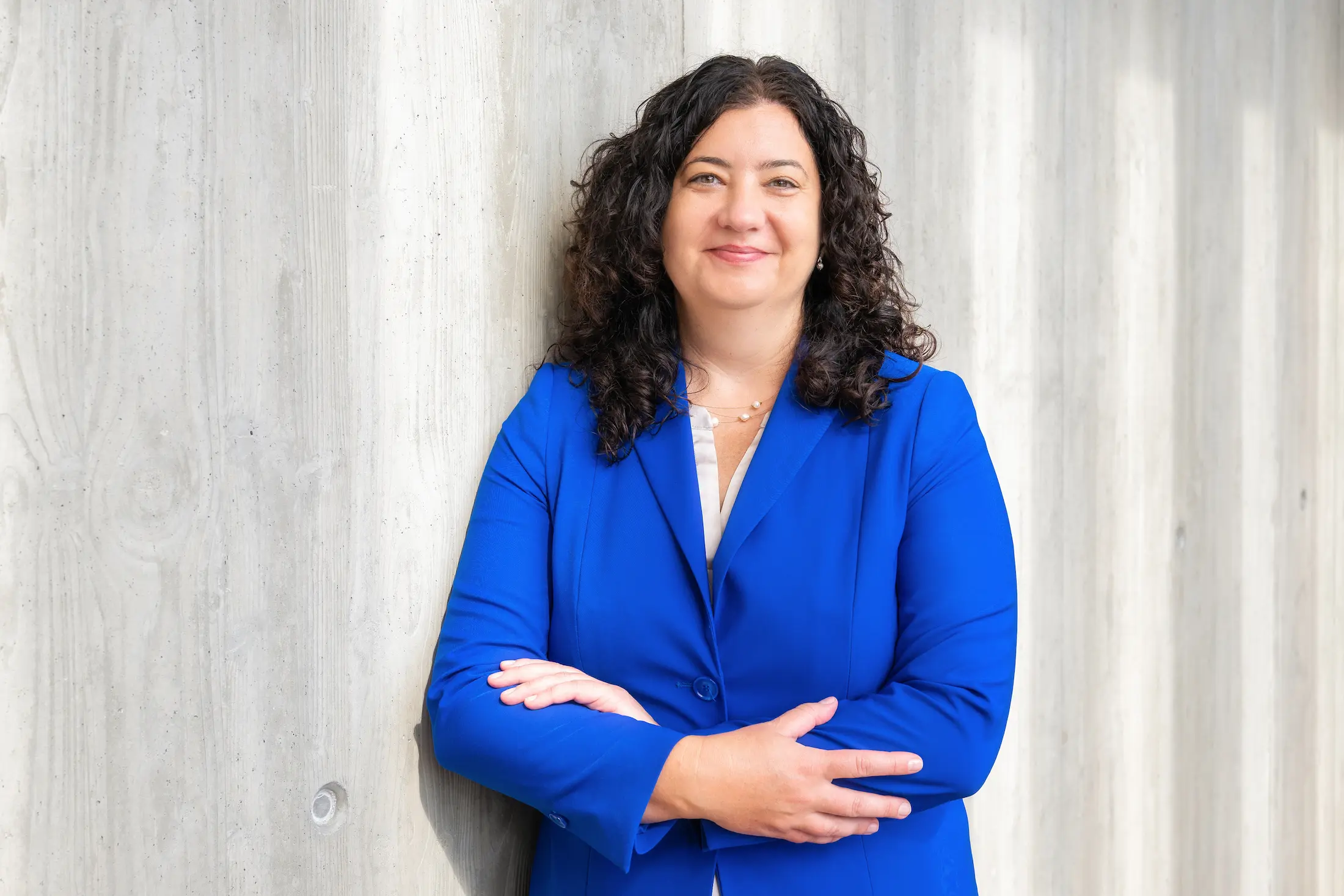
Daniela Secară, CEO, BT Capital Partners, gave an interview to Financial Intelligence, as part of the editorial project “Financial education – the best investment in yourself”, carried out together with Banca Transilvania.
The series of interviews dedicated to financial education brings together representatives of the financial system, the capital market, the authorities and elite athletes, who share perspectives on the role of responsibility, discipline and long-term planning in achieving financial success and performance in life. As part of this series, Ömer Tetik also gave an interview, CEO of Banca Transilvania.
You can read the full interview with Daniela Secară below.
The number of individual investors at the Bucharest Stock Exchange has increased significantly in recent years. What drove this trend and how sustainable is it?
The increase in the number of individual investors at the Bucharest Stock Exchange (BVB) is one of the most important developments in Romania’s capital market in recent years. A few years ago we were talking about a relatively small investor community; today we see it has reached 325,000 investors.
Several factors are behind this evolution — easier access to investing thanks to digitalization, major listings on the local market, and the Fidelis government bond offerings, all of which have attracted new investors. The growth is sustainable as long as it is supported by financial education, transparency and accessible investment solutions.
Beyond the number of accounts opened, over the long term success will be measured by investors’ ability to stay engaged, invest consistently and use the capital market as a tool both to build personal wealth and to finance the economy.
How has the profile of the Romanian investor changed in recent years?
As the number of investors at the BVB shows, the market has attracted more and more people. The profile hasn’t so much changed as it has diversified: long‑term investors have entered the market, as have younger people — more willing to take on certain risks through instruments such as equities. What’s become evident is that interest in investing has gained momentum, the experience has improved through technology, costs are lower, and a heterogeneous community is maturing and expanding.
What are the most common questions or concerns among people who want to start investing in the stock market?
How much can I start with, is there a risk I’ll lose my money, how do I choose the right investment, is now a good time to invest? These are the usual questions, and they reflect natural concerns, because any investment can come with a degree of uncertainty.
Many Romanians think stock market investing is complicated or requires very large sums. How can this perception be addressed?
It’s a myth that is being debunked every day. The reality is that today access to financial markets is simpler than ever, and you can start investing with accessible amounts. The perception of complexity can be countered through financial education and concrete examples. Technology has also significantly reduced the “barriers to entry” — apps provide quick access to information, investment tools and diversified solutions. Recurring investments help avoid committing a large sum at the outset and benefit from time and compounding. As access to information and financial education grows, this perception will continue to change.
In recent years we’ve seen a positive shift — more and more people understand that investing is not the privilege of a narrow group, but a natural component of responsible planning.
What are the most common mistakes made by beginners, and what would you recommend to help them avoid these?
The most common mistake is to see investing as a way to make quick gains. Successful investing is built over time, through discipline, patience and decisions based on analysis, not emotions. Another mistake is excessive concentration in a single company, a single sector or a single opportunity that happens to be “hot” at a given moment. Diversification remains one of the most effective ways to manage risk and protect money over the long term. Recurring investments are also an effective strategy for most individual investors.
My message to beginners would be: don’t try to find the next spectacular investment — build over time — and remember that the most costly mistake in investing is not missing an opportunity, but making decisions under the influence of emotions.
In recent years, investors have had access to numerous listings and bond issues. How do you gauge individual investors’ interest in these opportunities?
The yields offered by such financial instruments are a key attraction for investors, as is the desire to be part of the growth stories of Romanian companies.
How important is portfolio diversification for an individual investor, and how should it be approached based on risk profile?
Diversification is one of the most important rules in investing. Even the most experienced investors cannot always predict which company or industry will perform best. The approach should be tailored to each investor’s risk profile. For more conservative investors, the portfolio can include fixed‑income instruments such as government securities or bonds. Those with a moderate appetite can combine these with equities and diversified funds, while more dynamic investors can allocate a higher share to equities, accepting higher volatility in exchange for the potential of higher returns.
For individual investors, mutual funds and ETFs are efficient diversification tools because they provide simple access to a large number of companies and sectors through a single instrument. Investment success depends on building a balanced portfolio aligned with a person’s objectives. In fact, diversification doesn’t mean simply having more investments, but having exposure across different sectors, companies, markets and asset classes. That way, the idiosyncratic risk of any single investment is reduced and the portfolio is more resilient in periods of volatility.
How should investors react during periods of heightened volatility? What mistakes do you most often see in such moments?
Volatility is part of how financial markets normally function. Returns are not built in periods of comfort, but in investors’ ability to navigate uncertainty without abandoning their strategy. Short‑term fluctuations can be uncomfortable, but for investors focused on long‑term goals they are often normal phases of the market cycle.
Very often, the most costly mistakes are not due to a lack of information, but to decisions made precisely during volatile periods. Many investors buy when optimism is high and sell when fear dominates the market. Another mistake is focusing exclusively on day‑to‑day news. Markets often anticipate, digest and react to economic, political and geopolitical events, but a company’s value is determined by its ability to deliver results over the long term. Investors who watch only daily price moves risk losing sight of the bigger picture.
Periods of volatility are a test of diversification. A portfolio built to be balanced and in line with the investor’s risk profile offers better protection against shocks and reduces the temptation to make impulsive decisions. Paradoxically, volatility also creates opportunities. For those with liquidity, patience and a long‑term perspective, corrections can open entry points into strong companies.
What role does financial education play in investment success? Is access to information enough, or is specialized advice also needed?
Financial education is today one of the most important drivers of investment success. Access to information is easier than ever, but information itself doesn’t guarantee good decisions. The difference between an investor who reacts to market noise and one who builds long‑term value is the ability to understand, interpret and use information responsibly. A financially educated investor understands that performance doesn’t come from trying to anticipate every market move, but from consistency, diversification and patience.
I believe financial education and specialized advice are not alternatives, but complementary. Education provides the foundations needed to understand risks and opportunities, while professional advice helps the investor turn that knowledge into a strategy tailored to their plans, risk profile and time horizon. Just as access to medical information doesn’t replace a doctor, access to financial information doesn’t replace the expertise of a consultant or a broker. The specialist’s role is to bring perspective, discipline and objectivity precisely when emotions can strongly influence decisions.
How do you assess the level of awareness among individual investors in Romania compared with other markets in the region?
The level of awareness among investors has improved significantly in recent years. We see growing interest in investing, increased participation in the capital market and a greater openness to instruments that, in years past, were used by a limited number of people. Of course, there is still room to grow — both in terms of financial knowledge and investment experience.
In more mature markets in Central and Eastern Europe, investors have benefited from a longer tradition of investing and a stronger presence of financial education in the public space. Romania is catching up fast, supported by digitalization, easy access to information and the increasingly strong results of listed companies.
What we appreciate about Romanian investors is that they are increasingly keen to understand how the market works and to make well‑founded decisions, not just to chase short‑term returns. Romania doesn’t have an information‑access problem, but the opportunity to turn information into an investment culture — the next step that can accelerate the development of the local capital market and the growth in the number of investors.
Digitalization has made investing more accessible than ever. How has technology changed the relationship between brokers and investors?
Digitalization has brought a paradigm shift, opening up access to investing in an unprecedented way. Today, an investor can open an account, analyze markets and place trades in minutes, directly from their phone. This has brought the capital market closer to a growing number of Romanians.
Technology has also transformed the broker’s role. If in the past the broker was primarily a transaction intermediary, today they are increasingly a partner for advice and financial education. The value comes from interpreting information and turning it into a coherent strategy. At the same time, technology has changed investor expectations: they want more transparency, real‑time access to data, highly intuitive digital tools and fast communication. Brokers who manage to combine the advantages of technology with human expertise are the ones who create the most value for clients.
Artificial intelligence is increasingly being used in financial analysis and the investment process. How do you see its impact on individual investors?
Artificial intelligence has the potential to be one of the most important transformations in investing in decades. For individual investors, the main benefit is the ability to access and process very large volumes of information in a very short time, which can support better‑founded decisions.
We already see applications that use AI to analyze financial reports, monitor news with market impact, identify trends and personalize relevant information for investors. This democratizes access to tools that, until recently, were available almost exclusively to institutional investors. Even so, as in everyday life, it’s important to see artificial intelligence as an aid, not a substitute for human judgment. AI can analyze data and identify patterns, but it can’t replace experience, understanding of the economic context or the ability to assess factors that aren’t always measurable.
There is also a risk — as information becomes more accessible and answers are generated instantly, people may get the impression that investing is very simple and free of uncertainty. In reality, long‑term success still depends on discipline, risk management and the ability to stick to a strategy regardless of market fluctuations. AI will help investors be better informed, but truly important decisions will continue to require discernment, experience and a strategic view of the market.
Which sectors of Romania’s economy do you consider offer the most interesting opportunities for long‑term investors?
There are attractive opportunities across several sectors where we see strong structural trends — rising consumption, the economy’s digitalization, infrastructure development and the energy transition. The most interesting opportunities are at the intersection of the economy’s needs and companies’ ability to create value sustainably. I would mention the financial sector, energy and technology. Analysis and experience show that investment performance doesn’t come from identifying a single winning sector, but from building a diversified portfolio of solid companies with resilient business models and sound governance.
How do you see individual investors’ interest in dividends compared with investments focused on company growth?
Individual investors in Romania have traditionally paid close attention to companies that offer attractive, predictable dividends. It’s a natural approach in a market that is still maturing, where many investors value the visibility and tangibility of a recurring income stream from their investments. The local capital market has stood out in recent years precisely through the presence of companies with solid dividend policies.
We’re also seeing a shift in perspective among the new generation of investors. As the level of financial education rises and access to information becomes easier, many investors understand that the total return of an investment comes from both dividends and the appreciation of a company’s value over time.
So I don’t think it’s a choice between dividends and growth, but a balance between the two. High‑performing companies generate long‑term value precisely through their ability to allocate capital efficiently — to reward shareholders when appropriate, but also to reinvest to support future development.
For long‑term investors, the most important question is not how big this year’s dividend is, but whether the company can create more value over time. A company that reinvests intelligently and strengthens its market position can deliver superior returns even in the absence of dividends.
As the Romanian market develops, I expect to see an evolution similar to that in mature markets, where investors increasingly analyze the quality of the business model, competitive advantages and growth potential, not just the dividend yield.