Oana Ilaș of BT among the Top 100 Most Powerful Women in Business: The New Leadership Model in an Increasingly Digital Bank
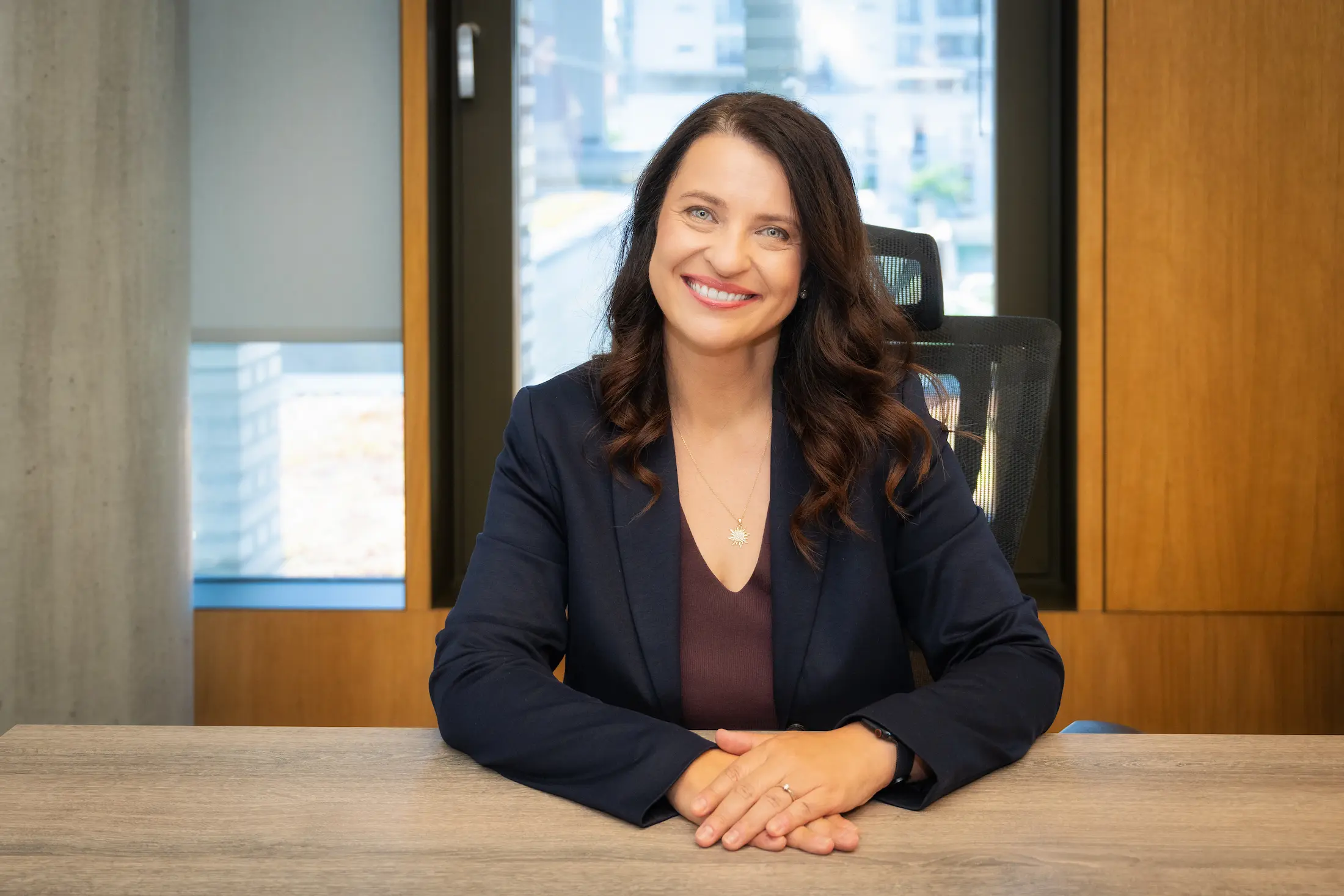
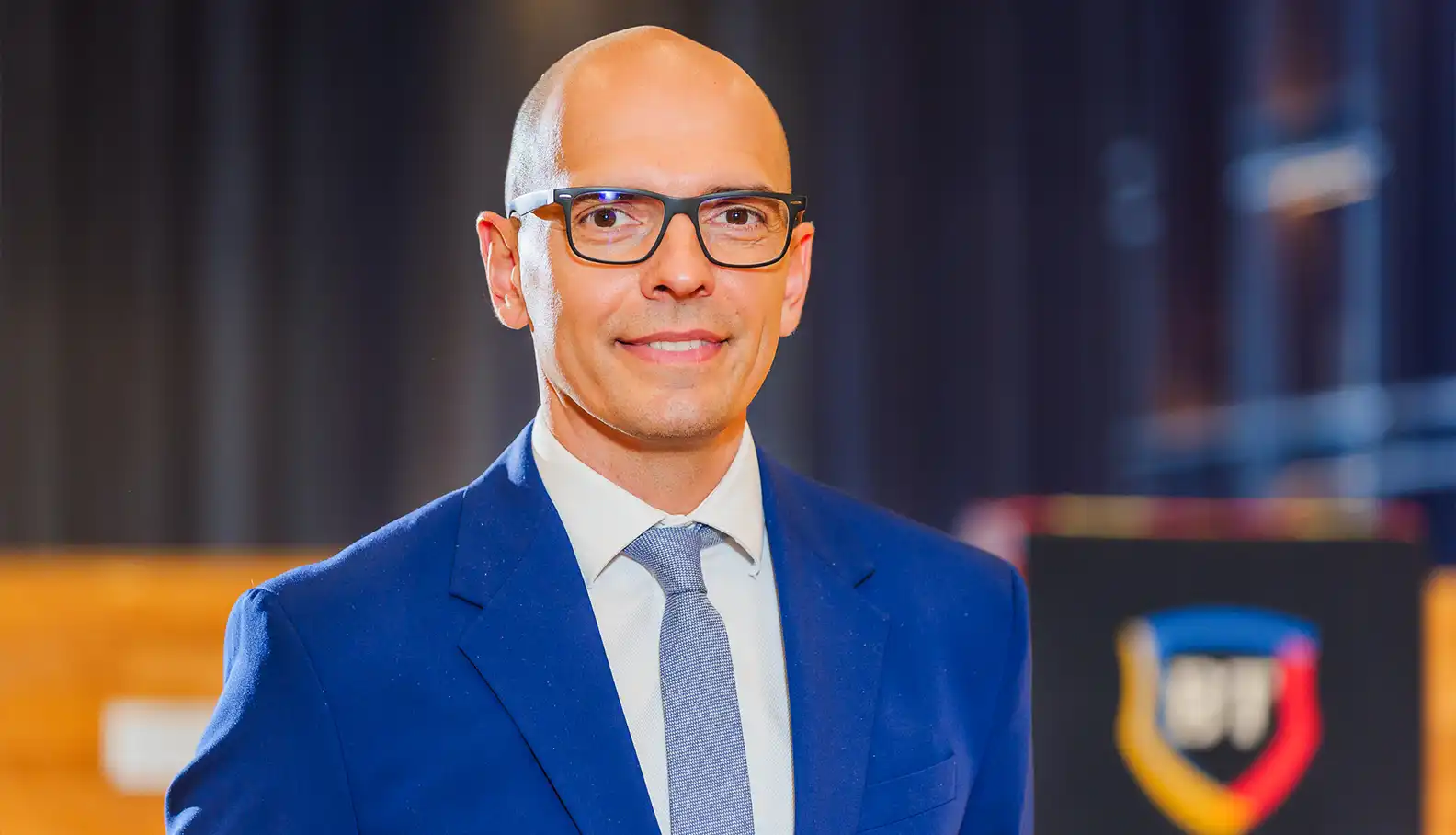
Oana Ilaș, Deputy CEO, Retail Banking, Banca Transilvania, oversees the retail and private banking businesses, as well as the development and management of retail products — from lending, cards, bancassurance and deposits to retail digital projects, retail data analytics, contact center & customer care, loan processing — and the bank’s foreign branches. With over 20 years at BT, she has played a significant role in accelerating the bank’s digital transformation and in strengthening its leadership in card services. She is a member of the Board of Directors – Biroul de Credit BT – as well as on the Boards of BT Direct and BT Asset Management, companies of the Banca Transilvania Financial Group. Oana Ilaș is also Chair of the Visa Romania Executive Committee.
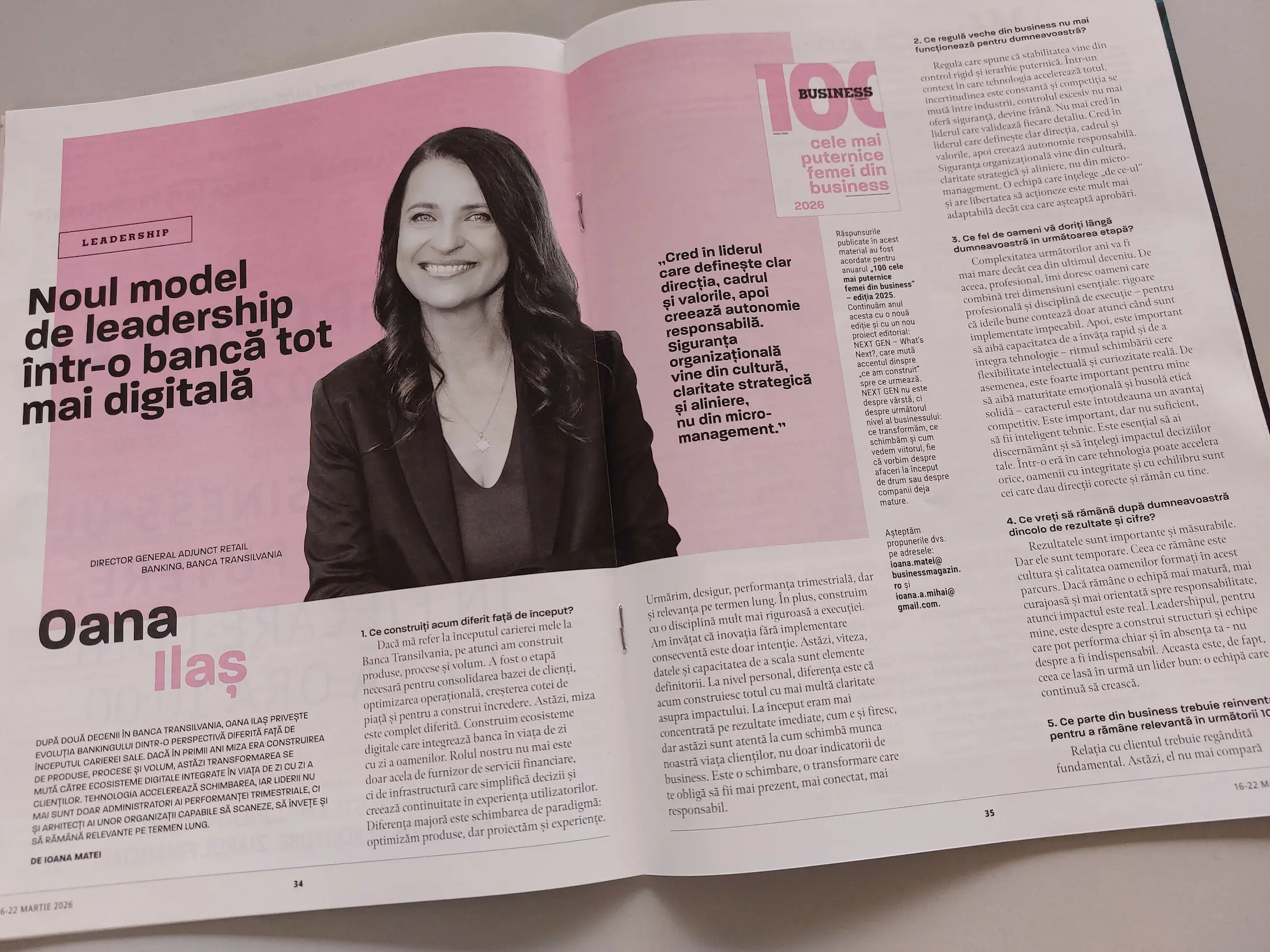
On being included among the top 100 most powerful women in business, she gave an interview to Business Magazin, where she talks about the bank’s digital transformation and new leadership models that encourage innovation, autonomy and accountability within teams.
What are you building differently now than at the beginning?
Thinking back to the start of my career at Banca Transilvania, back then we built products, processes and volume. It was a necessary phase to strengthen our client base, streamline operations, grow market share and build trust.
Today, the focus is completely different. We’re building digital ecosystems that weave the bank into people’s everyday lives. Our role is no longer just as a provider of financial services, but as infrastructure that simplifies decisions and creates continuity in the user experience. The big difference is a paradigm shift: we still optimize products, but we also design experiences. We track, of course, quarterly performance, but also long-term relevance. And we build with much greater discipline in execution. I’ve learned that innovation without consistent execution is just intent. Today, speed, data and the ability to scale are defining.
On a personal level, the difference is that I now build with much greater clarity about impact. At the beginning I was more focused on immediate results, as you’d expect, but today I pay attention to how our work changes clients’ lives, not just business metrics. It’s a shift that forces you to be more present, more connected, more accountable.
Which old business rule no longer works for you?
The one that says stability comes from rigid control and strong hierarchy. In a world where technology accelerates everything, uncertainty is constant and competition crosses industry lines, excessive control no longer provides safety; it becomes a brake.
I no longer believe in the leader who signs off on every detail. I believe in the leader who clearly defines direction, frameworks and values, then creates responsible autonomy. Organizational safety comes from culture, strategic clarity and alignment, not from micromanagement. A team that understands the “why” and has the freedom to act is far more adaptable than one that waits for approvals.
What kind of people do you want around you in the next stage?
The next few years will be more complex than the last decade. That’s why, professionally, I want people who combine three essential dimensions: professional rigor and execution discipline — because good ideas only matter when they are executed flawlessly. Second, the ability to learn fast and integrate technology — the pace of change demands intellectual flexibility and real curiosity. And it matters a lot to me that they have emotional maturity and a strong ethical compass — character is always a competitive advantage.
Being technically smart is important, but not enough. It’s essential to have discernment and understand the impact of your decisions. In an era where technology can accelerate anything, people with integrity and balance are the ones who set the right direction and stay with you.
What do you want to leave behind beyond results and numbers?
Results are important and measurable. But they are temporary. What endures is the culture and the quality of the people developed along the way. If what remains is a team that is more mature, bolder and more responsibility‑driven, the impact is real. For me, leadership is about building structures and teams that can perform even in your absence — not about being indispensable. That, in fact, is what a good leader leaves behind: a team that keeps growing.
What part of the business needs to be reinvented to stay relevant over the next 10 years?
The customer relationship needs to be fundamentally rethought. Today, customers no longer compare their banking experience with other banks, but with the best digital experiences in the world. That means radical simplicity, smart personalization, anticipating needs and being where people need you in their everyday lives. Over the next 10 years, I believe the difference won’t come from the products themselves, but from the ability to integrate data in an ethical, predictive and relevant way. Banks, in general, need to become less transactional and more contextual — to be there where people need them.
Where do you see the biggest growth opportunity that others still don’t see?
I increasingly see the bank’s role as an orchestrator of ecosystems. There is major opportunity in integrating financial services into platforms dedicated to entrepreneurs, all kinds of communities, the diaspora or specific industries. Sustainable growth comes not only from lending, but from the bank’s ability to become an integrator — connecting services, building partnerships, enabling digital identity and offering financial education in a coherent experience.
What role will technology and AI play in the next chapter of the business?
Artificial intelligence is a structural change, not an incremental upgrade. It will influence how we make decisions, manage risk, personalize the customer experience and drive operational efficiency. Whether it scares us or not, it will shape how we live and work. But technology is only an accelerator. If the organization has strategic clarity, a strong culture and discipline, AI accelerates progress. If those are missing, it can amplify imbalances. The real challenge is not technical but cultural: how ready we are to adopt new ways of working, trust data and build responsibly in a world where speed becomes the norm.
What mindset do you need to change as a leader for the next stage?
For the period ahead, the essential shift is from being an executive involved in the details to being a strategic architect. As the organization grows, my impact no longer comes from optimizing individual processes, but from the ability to build thinking frameworks, set clear directions and ensure coherence across initiatives. It’s an exercise in maturity to accept that your impact comes more from the alignment you create, the clarity you provide and the space you give teams to perform — more than from direct intervention. Practically, you move from doing it yourself, to making it possible.
What should the next generation learn from your journey?
That sustainable performance is built over time. Enthusiasm matters, but discipline, consistency and the ability to stay focused on strategic objectives are what make the difference. I would add owning vulnerability and authenticity, which are not incompatible with executive performance. On the contrary, they create trust, cohesion and a style of leadership that stands the test of time.
If you were to rebuild the business from scratch tomorrow, what would you do differently?
I would build on a natively digital, modular, scalable architecture. I would organize teams around experiences, not traditional structures, to create simple, coherent flows for clients. I’d embed a culture of experimentation and rapid iteration from day one, so that continuous learning becomes part of the DNA. I would invest significantly in clients’ financial and digital education. An informed client is not “just” a user of services; they are a growth partner, which fundamentally changes the relationship between the bank and its clients, and with the community.
Which lifestyle rituals are no longer negotiable for you?
I’ve redefined my relationship with time and energy. Daily movement, moments of reflection and continuous learning are not secondary activities, but pillars of my professional performance. I see leadership as a marathon, and mental and physical resilience are strategic assets in this journey. I no longer negotiate on health and clarity. Without them, decisions become reactive instead of strategic.
What are the strengths and areas to improve for the new generation?
The new generation is digital‑native, adaptable and less intimidated by change. They speak up and have a natural relationship with technology — two essential strengths in a world that constantly reinvents itself.
Where they need to develop is in strategic patience, understanding economic cycles, consistency and long‑term discipline. With proper mentoring and real exposure to responsibility, though, this generation can accelerate systemic transformation much faster than we did.