Ömer Tetik, BT CEO: Our home market is Romania
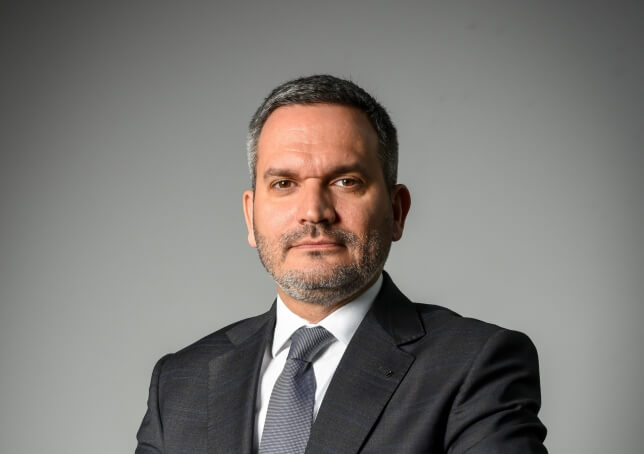
Interview with Ömer Tetik, CEO of Banca Transilvania, given to SeeNews on the occasion of the publication of the Ranking of the Largest Banks in Southeast Europe 2023, in which BT again ranks first this year.
In 2022, Banca Transilvania topped the list of the biggest banks in Southeast Europe for the fifth year running, weathering global pressures. What has underpinned its resilience?
We are proud to be among the largest banks in this part of Europe. Romania is our home market, so throughout these years we have continued to be a principal financier of the local economy, with most sectors in scope.
SMEs have always been a priority for us, where we have unique capabilities in the market and branches in every region of Romania, including places where other banks do not have a presence. We are well positioned across client segments and we see that customers value the bank and like working with us. We have a very strong position in the micro, SME and mid-corporate market, as well as in specialised sectors such as healthcare and agribusiness. Some of these will continue to benefit from public investment and EU funds. There is still a large gap versus Western Europe in healthcare — investment is needed, and we have the know-how to support our clients. In retail banking, there are areas where we’ve achieved network effects — BT Pay is the most used banking and payments app in Romania, and the Star program is the largest ecosystem of merchants and credit cards.
Given the challenges coming from the economic and international environment, each year we have remained cautiously optimistic. Optimism gives us energy and drive, while prudence keeps us vigilant amid the volatility and the fundamental shift in the macro backdrop in recent years — a period that has seen everything from a pandemic to war. And we keep moving forward.
What is your forecast for the bank’s financial performance in 2023?
As a listed company, we unfortunately cannot disclose forward-looking guidance. Our 2023 results allow you to anticipate BT’s trajectory to some extent, but — like any other player in the ecosystem — we are exposed to the challenges in the economic environment.
The bank is performing well. In the first half of the year we saw strong organic growth, driven especially by rising transaction volumes. We granted over 130,000 loans and, on the other hand, we reached 4 million customers. We made progress on digitalisation and inclusion, and overall 88% of our customers now use at least one of BT’s apps. The Group’s net consolidated profit at the end of June this year was 1,581.7 million lei (+51.14% versus June 2022), of which the bank’s was 1,269.0 million lei (+39.91% versus June 2022). We create value for people and businesses and support the economy at a pivotal time for Romania. We continue to invest in growing volumes and transactions and in financing the economy, to help ensure prosperity for Romanians. The bank’s profitability helps us further strengthen BT’s capital so we can deliver on our plans and meet regulatory requirements.
What headwinds do you anticipate to growth and what near-term opportunities do you see?
I’d refer to both Banca Transilvania and Romania because if the country does well, the bank does well too. For BT, one opportunity is our very large customer base. As I mentioned, we have passed the 4 million mark, which gives us the critical mass for selling products and services and for diversifying risk. Another is the bank’s pull in attracting new customers. For example, the first six months of the year brought over 280,000 new customers, which is over 1,600 per day. Headwinds in banking come from fiscal policy uncertainty and rising regulatory complexity in our industry, but we adapt.
As for Romania, a first opportunity is ramping up infrastructure investment — above all because it is necessary. Transport infrastructure, for example, is decisive for the country’s development, as it fundamentally improves accessibility across regions, shortens distances and travel times, and strengthens links between economic areas. Another opportunity is the absorption of funds under the National Recovery and Resilience Plan (PNRR), which would help grow the country and close the gap with the West. The headwinds relate to a slowdown in real-economy growth, intensifying geopolitical tensions and pressure on international markets due to global macro headwinds.
The acquisition of three leasing companies over the past five years has strengthened your position in this market. What are your objectives for this business and how do you see Romania’s appetite for leasing evolving?
Each of the three acquisitions — Țiriac Leasing (2022), Idea::Leasing (2021) and ERB Leasing (2018) — has brought us closer to BT Leasing’s objective of consolidating our position on this market and becoming number one in this segment too, just as we are in banking.
Romania’s leasing market has grown in recent years and we believe in its potential because leasing is an easy, fast way to acquire new, high‑performance vehicles and equipment. We’re pleased to see growing customer interest in electric vehicles and energy‑efficient equipment. The synergies between BT Leasing and the Banca Transilvania Financial Group, together with digitalisation, our offering and our team, are the engine of our growth in this line of business.
As projects under Romania’s National Recovery and Resilience Plan take shape and new targets come due, do you anticipate a funding gap in any sector, and how is the bank positioned to cover potential shortfalls?
I hope Romania sticks to the timetable for meeting the targets agreed under the PNRR and the European Commission’s requirements. That would bring billions of euros into the country, alongside public investment and reforms. The largest share of PNRR investment by the end of the implementation period will go to the construction sector, which spans infrastructure, renovation and utilities. Therefore, a potential funding gap could emerge here, and we are ready to support the companies delivering these projects.
Whether it’s investment in energy, education, digital transformation, sustainable transport or projects to finance energy‑efficiency upgrades to the existing housing stock, our bank supports these public initiatives because they contribute to the sustainable development of Romania’s economy. Moreover, under the PNRR facilities for the private sector, BT is participating by financing SMEs’ sustainability and competitiveness plans, facilities backed by portfolio guarantees managed by the European Investment Fund.
The full interview, in English, can be read here.