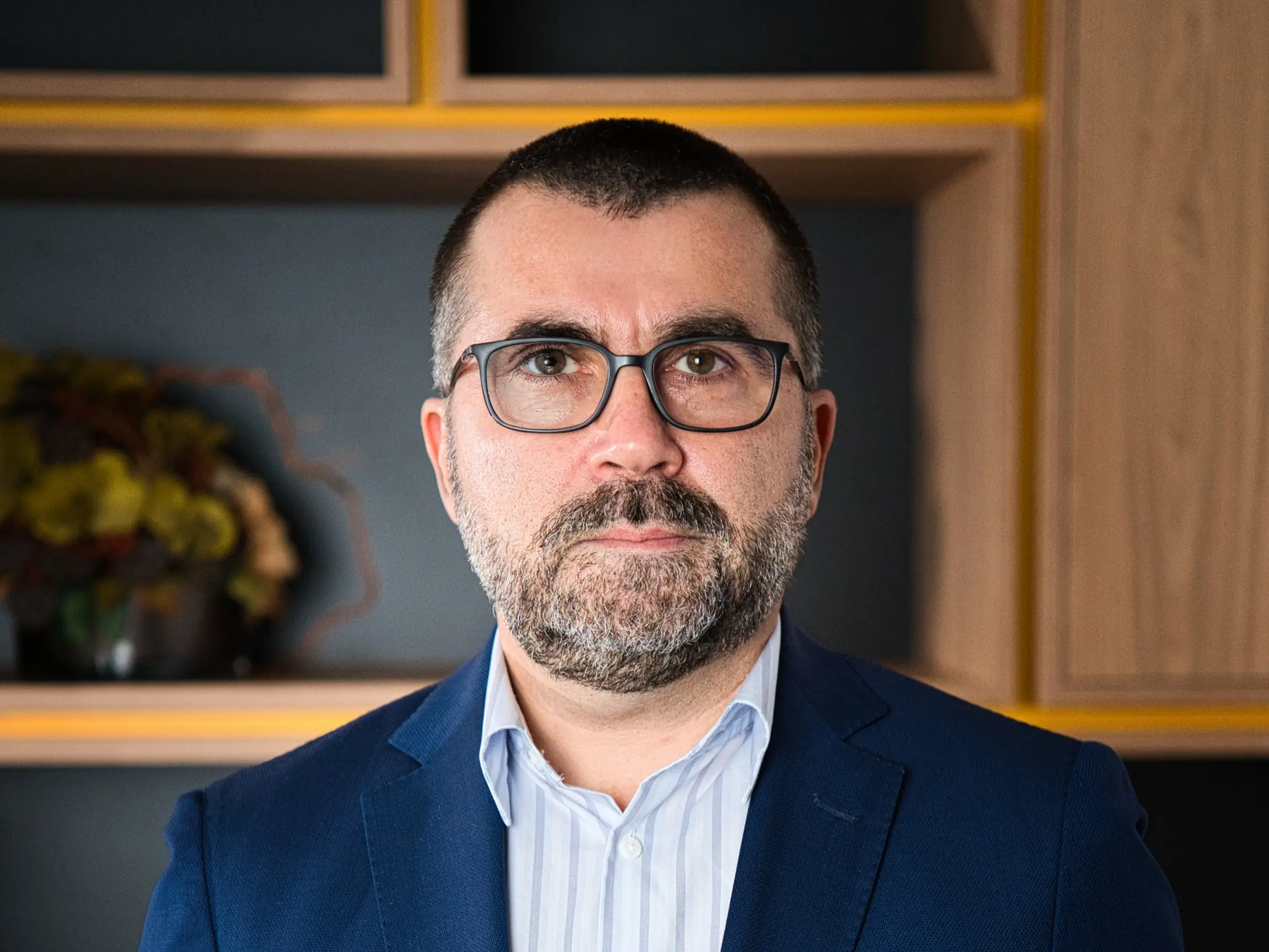
Sergiu Mircea, BT: Success in financial education is not about having all the answers, but about asking the right questions before making a decision
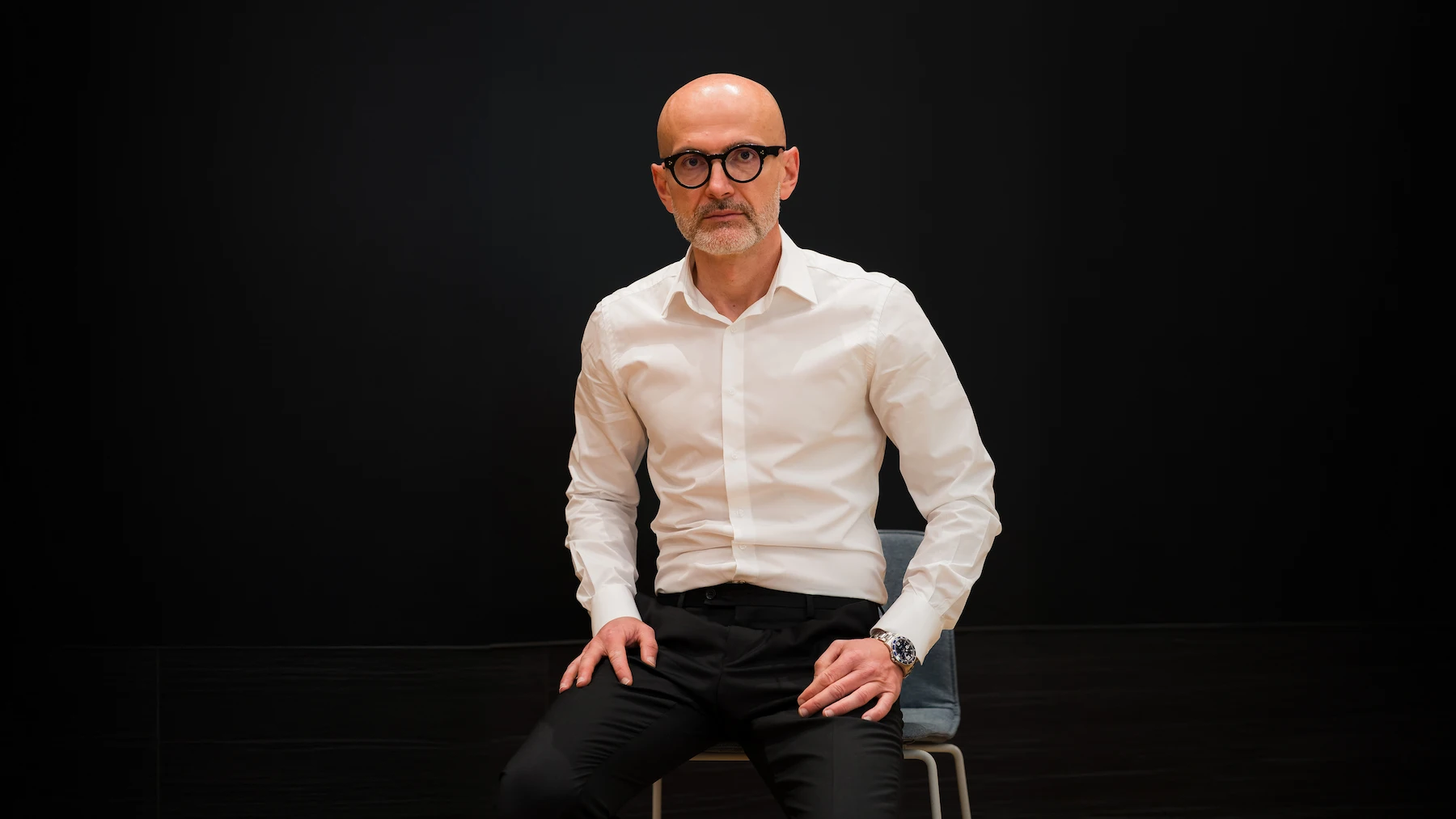
Financial education means more than information: it means changing how people relate to money and improving their chances of making better decisions, says Sergiu Mircea, Executive Director, Marketing, Communication & Customer Experience at Banca Transilvania, in an interview with Financial Intelligence, part of the editorial project “Financial education, the best investment in yourself”, produced together with Banca Transilvania.
This series of interviews dedicated to financial education brings together representatives of the financial system, the capital market and the authorities, as well as elite athletes, who share their perspectives on the role of responsibility, discipline and long-term planning in achieving financial success and performing in life.
Read the full interview with Sergiu Mircea below:
In recent years, Banca Transilvania has developed several financial education initiatives, from FIT – Finance in Terms Everyone Can Understand and Ask BT to projects dedicated to young people. Which of these do you think has had the greatest impact, and how do you measure results in concrete terms?
If we look at reach and the ability to get to people, FIT – Finance in Terms Everyone Can Understand is BT’s financial education initiative with the biggest impact. But for us, success is not just about audience numbers; it’s that financial education has become a natural, accessible conversation for more and more Romanians.
In the three years since launch, FIT has evolved from a project into a national financial education platform, present online, on social media, in schools and universities, and at Romania’s major music festivals. We’ve reached 50 million views of our educational content, over 150,000 participants in the themed quizzes, and over 80,000 children, pupils, students, teachers and parents who benefited from educational activities delivered by our colleagues in 2026.
Banca Transilvania has a particular advantage — as the largest bank in the country, with over 500 branches, over 10,000 colleagues and over 5 million customers, we can much more readily work at “big numbers”. As a result, what we do has a significant impact in Romania. Just think of our 10,000-plus colleagues. If they are trained and equipped to provide financial education guidance, the strength of the programme (FIT, in this case) is impressive. That’s exactly what we’ve done here, even though this was only one of the pillars of Finance in Terms Everyone Can Understand.
Beyond the numbers, the greatest satisfaction is the change we see in how people talk about money. If we can turn a topic perceived as difficult into one that inspires confidence and action, we’ve fully achieved our goal. For us, financial education means more than information; it means changing people’s relationship with money and giving them more chances to make better decisions for day-to-day life and for their future.
FIT set out to explain money and financial concepts in language accessible to everyone. A few years into the programme, what have you learned about Romanians’ relationship with money? What are the things we still find hardest to understand?
We’ve found that interest in financial education is much higher than the current level of knowledge. People want to understand money better, not because they are necessarily drawn to financial theory, but because they want more security, more options and more control over their future.
Our research shows the greatest information needs are around saving, investing, managing a personal budget and entrepreneurship. At the same time, many young people say they wish they had started saving earlier or better understood the consequences of certain financial decisions. These insights have shaped FIT’s evolution and confirmed that people need financial information that is simple, practical and relevant to everyday life. That’s why, through video series, educational content on social media, interactive quizzes, collaborations with content creators and an accessible online platform, we turn topics such as saving, investing, pensions or online safety into explanations that are easy to understand and apply. At the same time, we’ve gone where the audience is. FIT is not just digital content; it also means being present directly in communities.
People aren’t looking for complicated formulas; they want clear information for the choices they face in life. That’s why FIT’s role is to translate finance into human, approachable, easy-to-apply language.
We’ve also learned that people find it much easier to relate to concrete, personally relevant information than to abstractions. So we’ve tried to democratise information and speak in plain terms, and to show up where people are — especially since access to information is now as easy as it gets.
From Banca Transilvania’s experience, what are the most important things a young person should understand about money before earning their own income?
I’d start with a simple idea: time can be our ally. Financial habits built early have a much greater impact than decisions taken later — or too late. Then, how much we earn matters, but even more important is what we do with what we earn. And the highest-return investment remains investing in your own development — skills, education and the ability to learn continuously are assets that hold their value over the long term. Money can buy things, but good financial decisions can buy you time and options.
We’re seeing younger generations with instant access to investing, finance apps and information from social media. Is this democratisation of access to finance more an opportunity, or can it become a risk without financial education?
Access to information is an extraordinary opportunity, but also one of the biggest tests, because access to information does not automatically mean financial education.
Today, a young person can invest in a few minutes from their phone, but that doesn’t automatically mean they understand the product, the risks, the time horizon or how markets work. Social media can spark interest in investing, but major financial decisions should be taken on the basis of more robust information. Education makes the difference between opportunity and risk.
It’s a very good thing that younger generations have access to conversations about money, saving and investing much earlier than before. If we can complement this access with financial education, then the democratisation of finance can become one of this generation’s biggest advantages.
How can we turn a financial mistake into a lesson, without giving up on saving or investing?
As in any field, mistakes are part of learning. Sometimes they cost money, but they can also bring something valuable: experience and a more mature perspective on future decisions. If we treat a failed decision as the end of the road, we risk losing exactly what can help us over the long term. Saving and investing aren’t about perfection; they’re about consistency.
Saving, investing, pensions, insurance, lending — people are faced with an ever-growing number of decisions. What do you see as the biggest vulnerabilities in Romanians’ financial education today?
The paradox is that Romanians are increasingly interested in their financial future, yet they don’t always translate that concern into action.
People make decisions in a fast-changing environment. It’s no longer enough to know how to save. We need to understand the difference between saving and investing, the role of insurance, the impact of inflation on our own money, how private pensions work, and what a long-term loan entails. Information is everywhere, so the biggest challenge is to distinguish valuable information from noise and to turn knowledge into actions that make our lives better and more prosperous.
Another vulnerability, I believe, is the pace of technological progress and the way technology is shaping social media, traditional media and how we communicate. Risks emerge here because things change very quickly. People can fall into traps due to the uncontrolled, unregulated promotion of falsehoods or manipulation. Money can be lost to fraud, or bad investments can be made. This is our role as well: to invest in education campaigns. And that’s exactly what FIT does.
What role should banks play in financial education? Where does individual responsibility end and the responsibility of financial institutions to help people make better decisions begin?
Financial education is a shared responsibility. The decisions are each of ours to make, but banks can help make those decisions easier to understand and to take. At Banca Transilvania, we believe that beyond providing banking solutions, our role is to help build trust and financial understanding. Success in financial education doesn’t mean having all the answers; it means asking the right questions before making a decision.
If we were to create a “podium” for financial education, what would be the three rules any young person should follow to achieve independence and financial security?
In third place – understand the value of money, and the difference between price and value. Not everything expensive is valuable, and not everything valuable carries a price tag.
In second place – use time to your advantage. In finance, time is one of the few resources that can compound the results of a good decision.
And in first place – invest in yourself before investing in anything else. Education, skills and adaptability are investments that generate returns for life.